VASCULAR is an instant discharge process generating vascular structures in biomaterials.
1
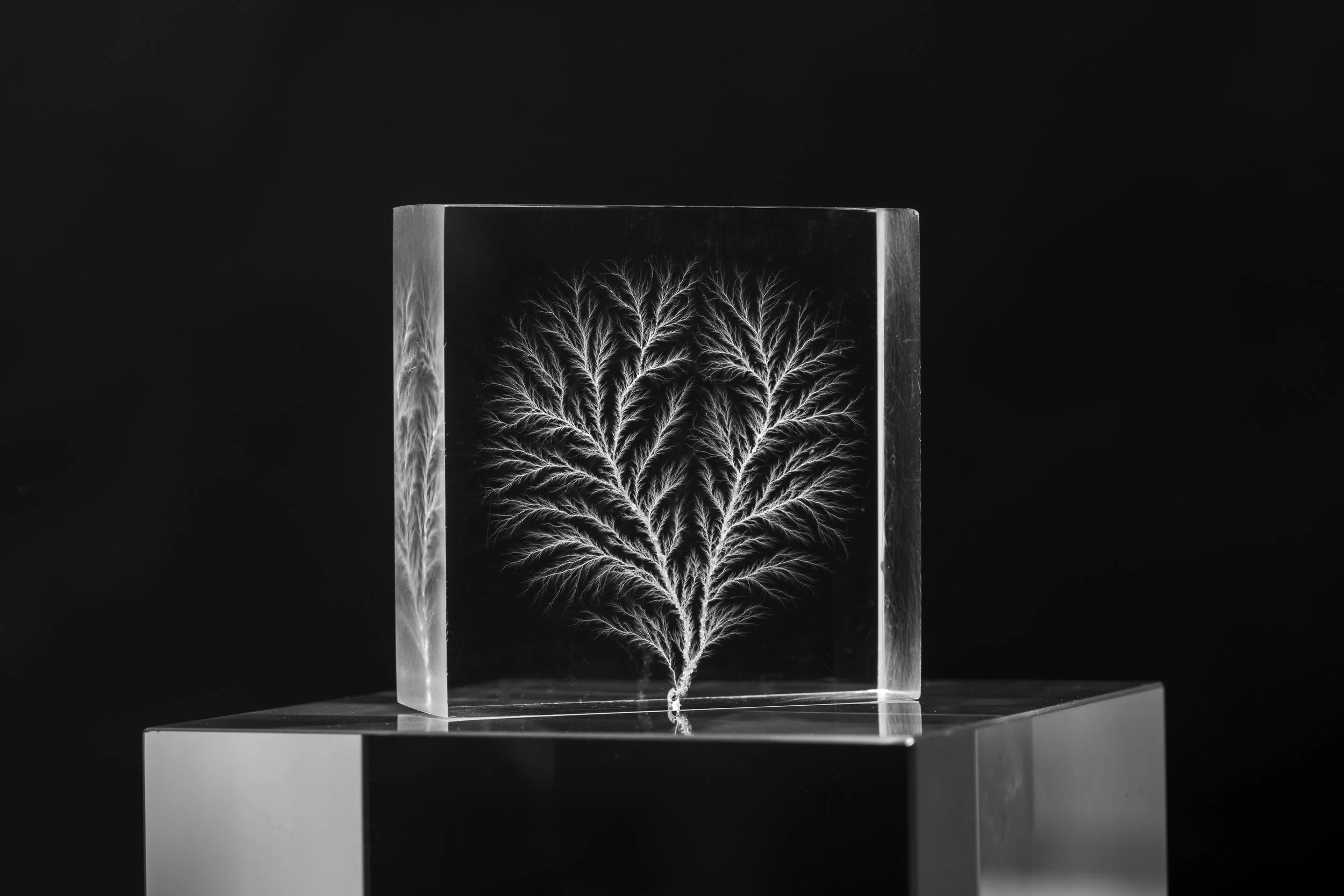
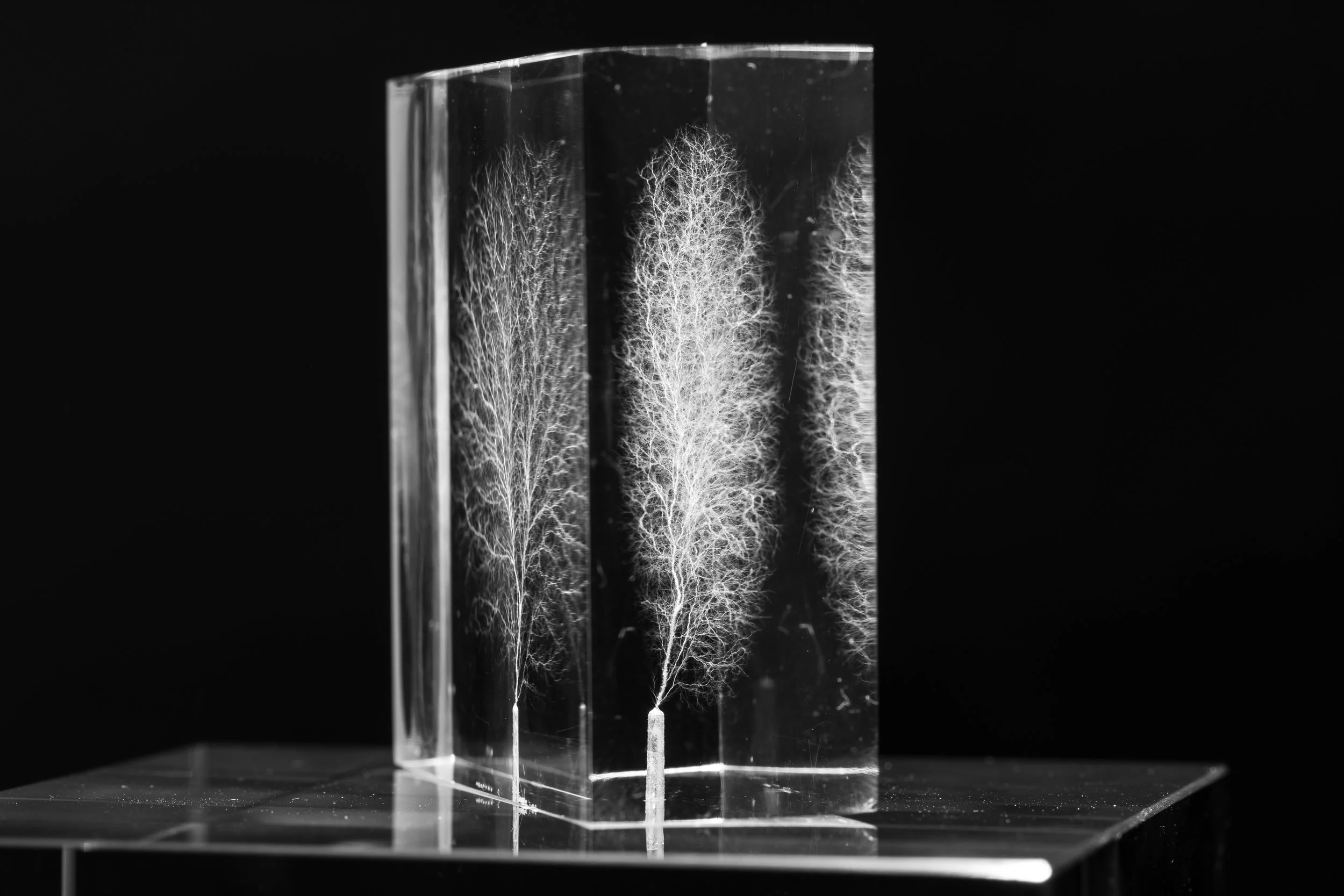
2
Entering the field of surgery is like entering in a whole new world. If many recent design projects explore living materials as agents for co-fabrication and more-than-human designs, Emile De Visscher went deeper in the same direction by exploring what it could mean to design for the living. This project is the result of a long term collaboration with Prof. Igor Sauer, head of the Experimental Surgery Lab in Charite Hospital, Berlin.
Surgery research’s urgent and crucial aim is to efficiently create artificial organs, to palliate donation scarcity and save lives. Cells are grown easily, but the architecture of the organs, called the Extra-Cellular Matrix, is still difficult to fabricate. 3D printing is a promising field of research, as well as re-cellularization of “ghosts” organs (organs emptied of their cells), but alternative methods should be explored. This question isn’t really a biological one, but rather connected to design and architecture : how to create a home structure for cells? How to build microvasculature architectures into biocompatible materials ?
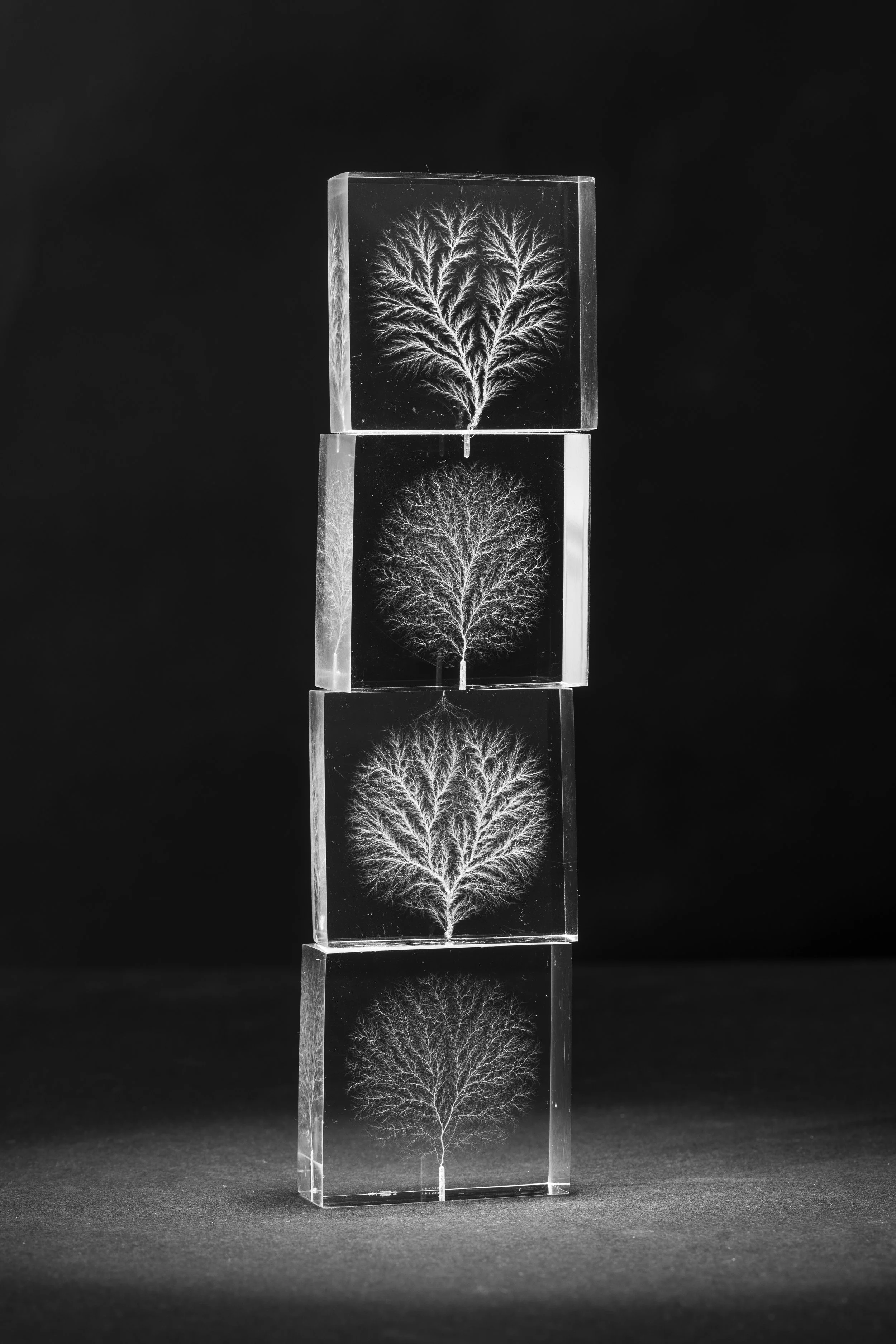
3
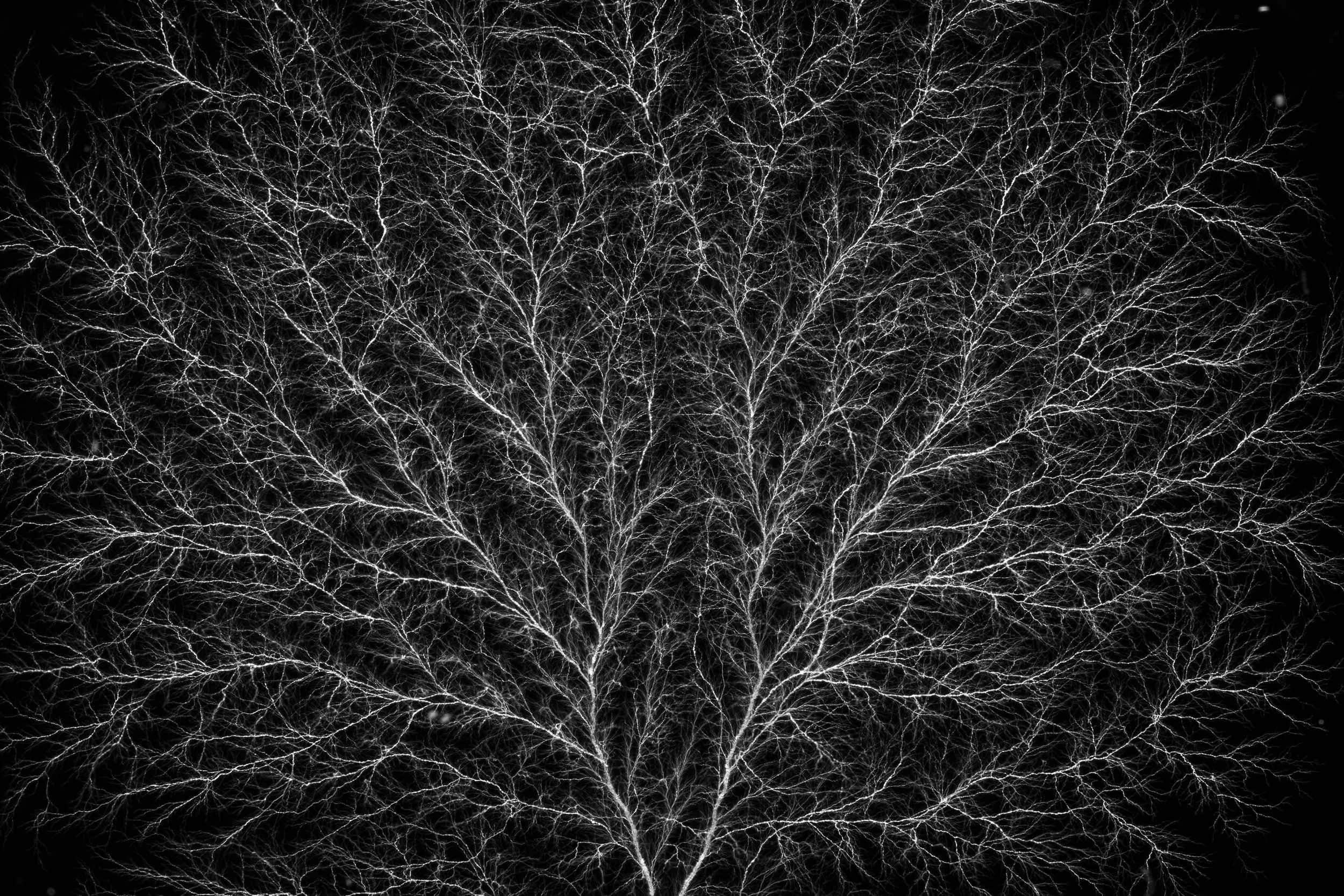
4
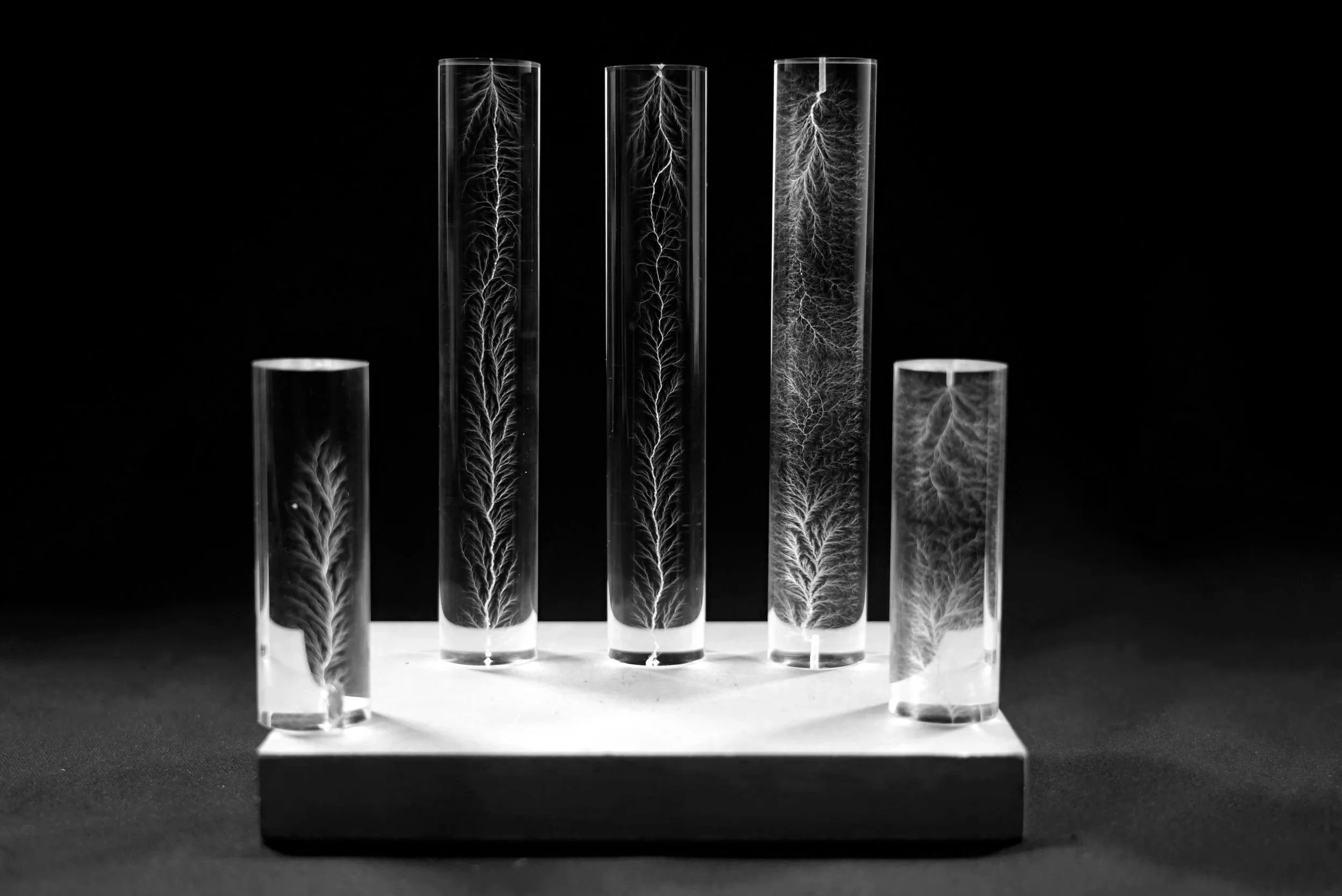
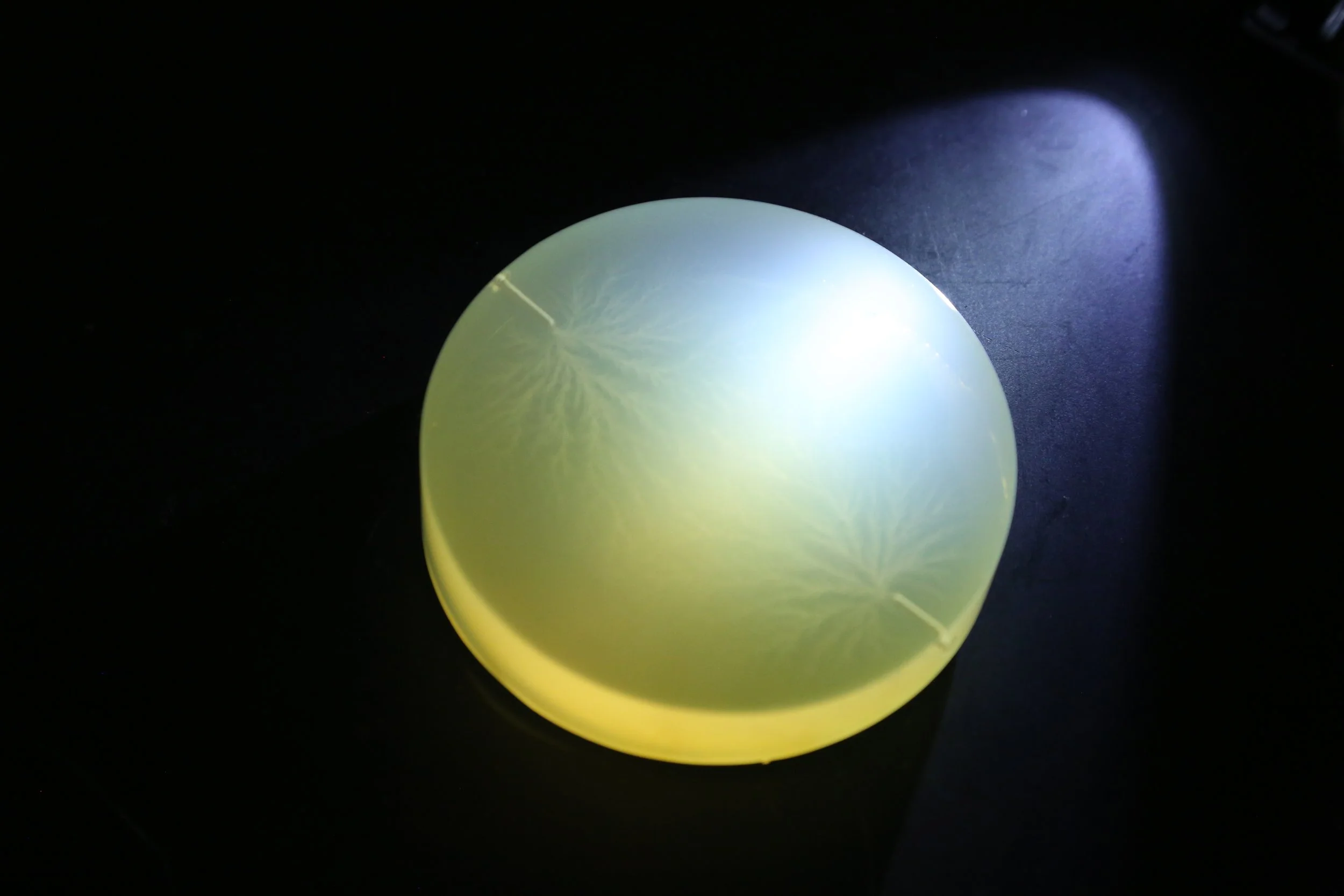
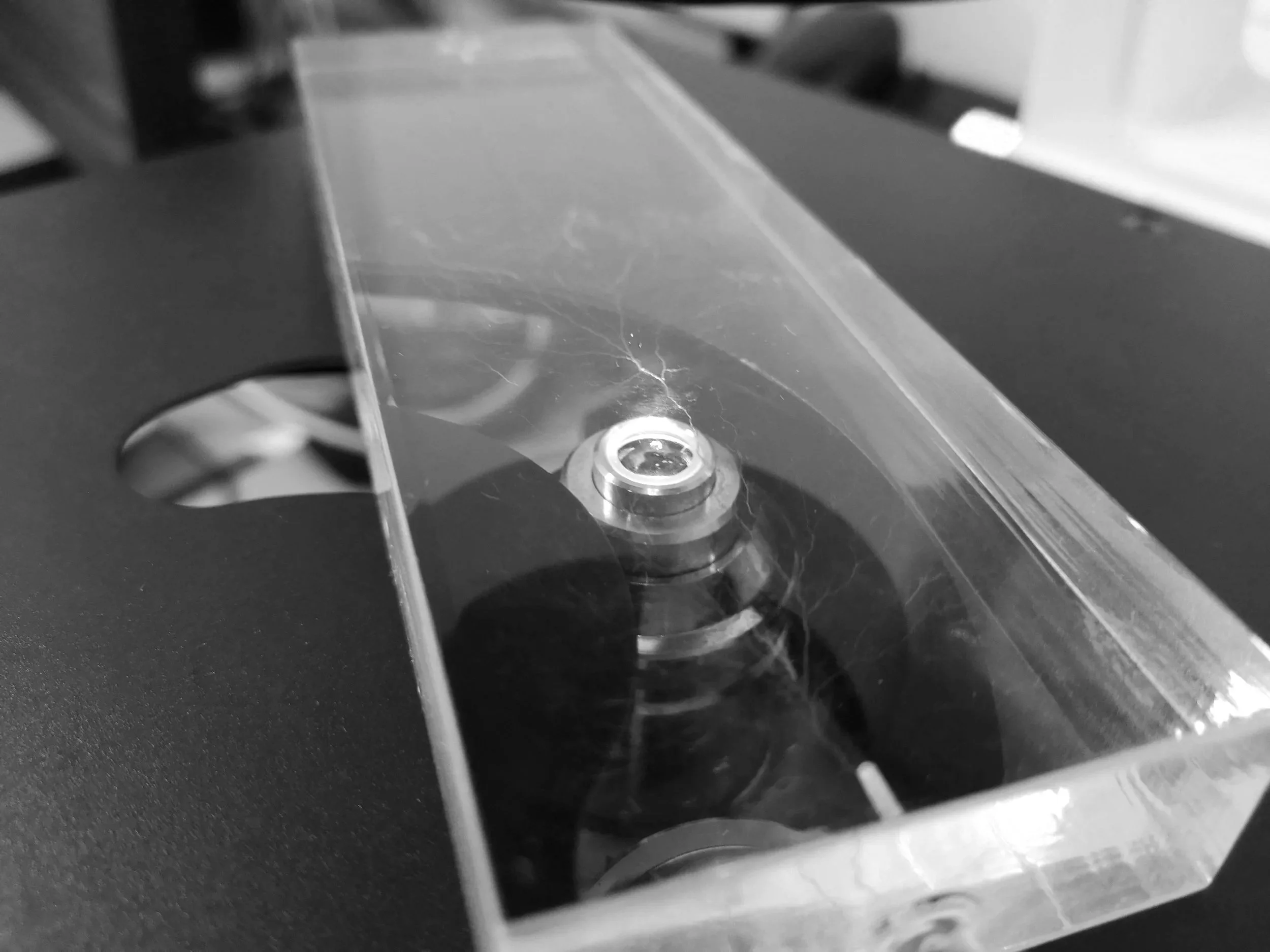
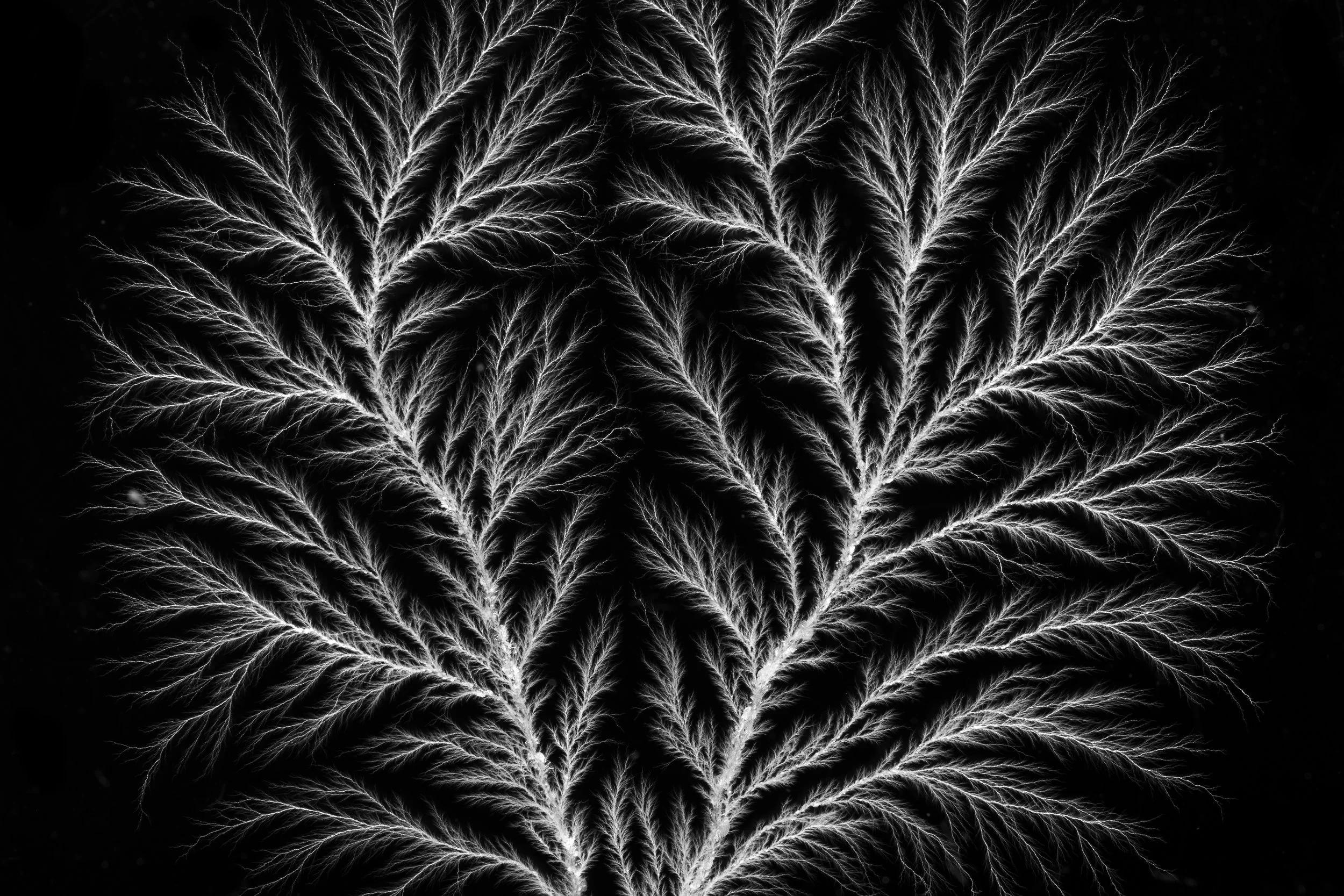
Looking at the structure of such Extra-cellular matrices, Emile De Visscher saw a pattern which could ressemble the geometry of dendritic structures of electric diffusion, like in Telsa’s famous high voltage experiments. He hus looked for ways of reproducing and capturing these patterns into matter. Initially inspired by fulgurites, created when a storm hits the sand, he found a method, inherited from nuclear physics : where electron are forced into a block of dielectric material, and then given a way out by hitting a metal point connected the ground. All electron are given a way out instantly and carve networks of micro-tubes, with a path optimized for the travel. This partial discharge, explored since the 80s in blocks of PMMA for decoration purposes, was here developed and used for biomedical applications.
5
6
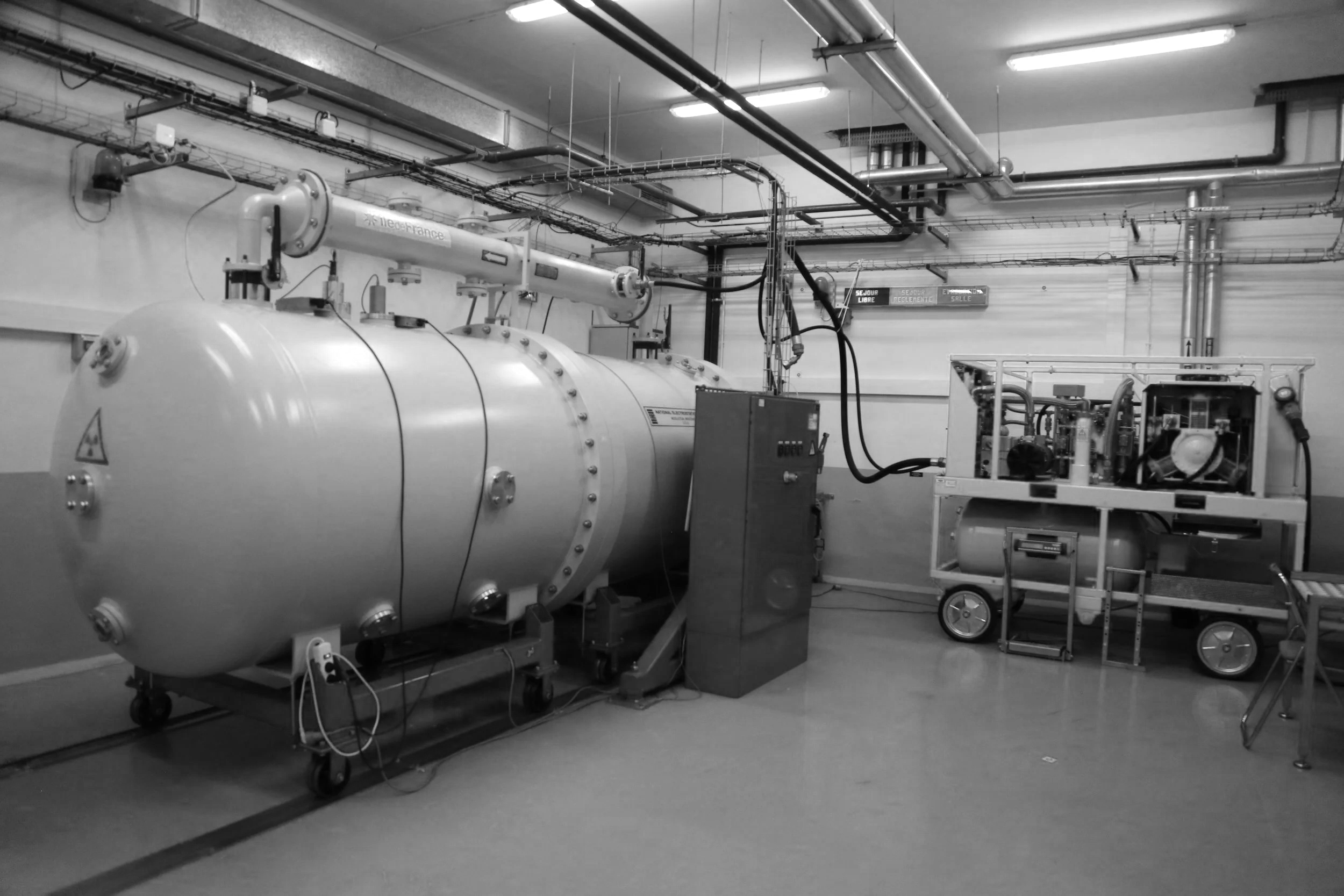
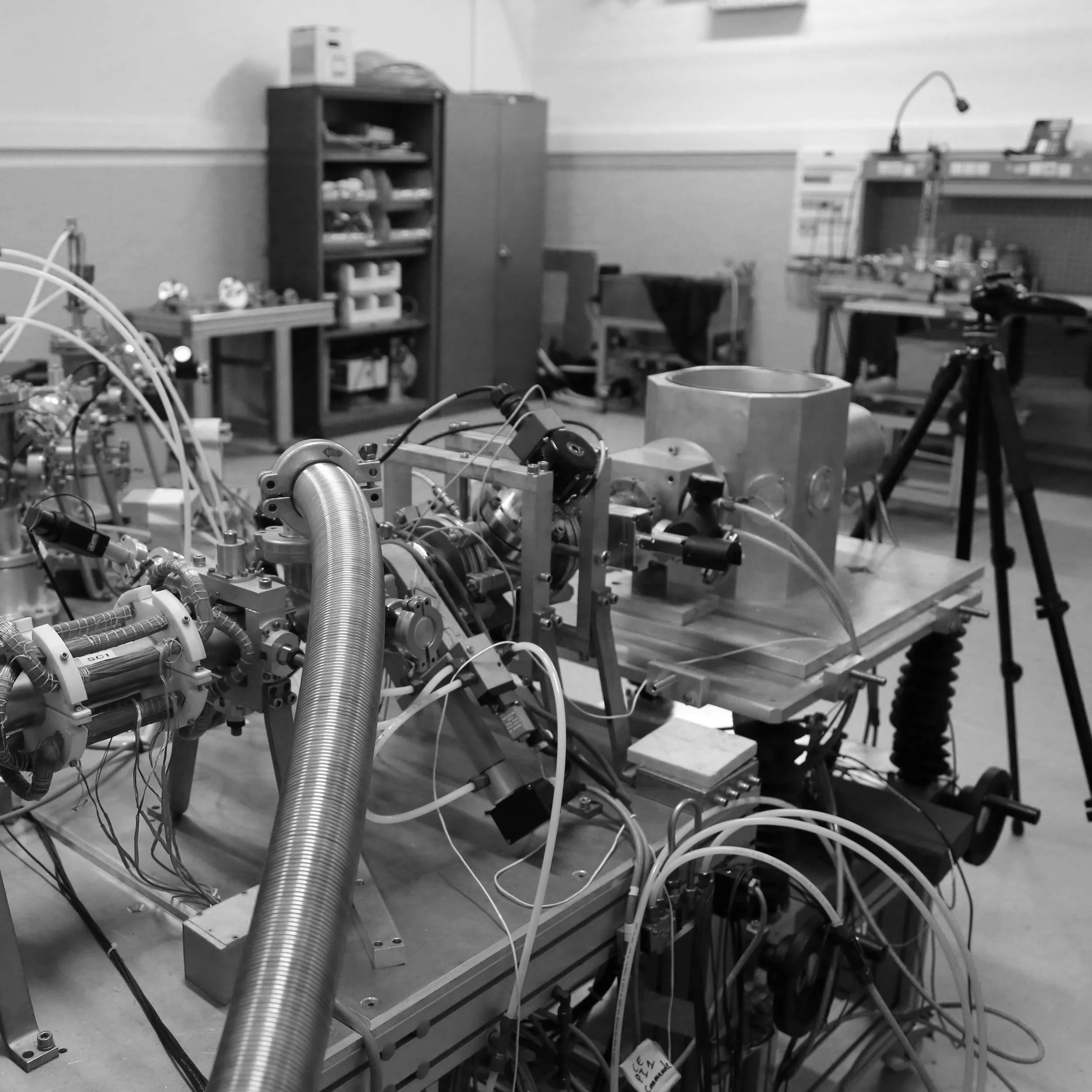
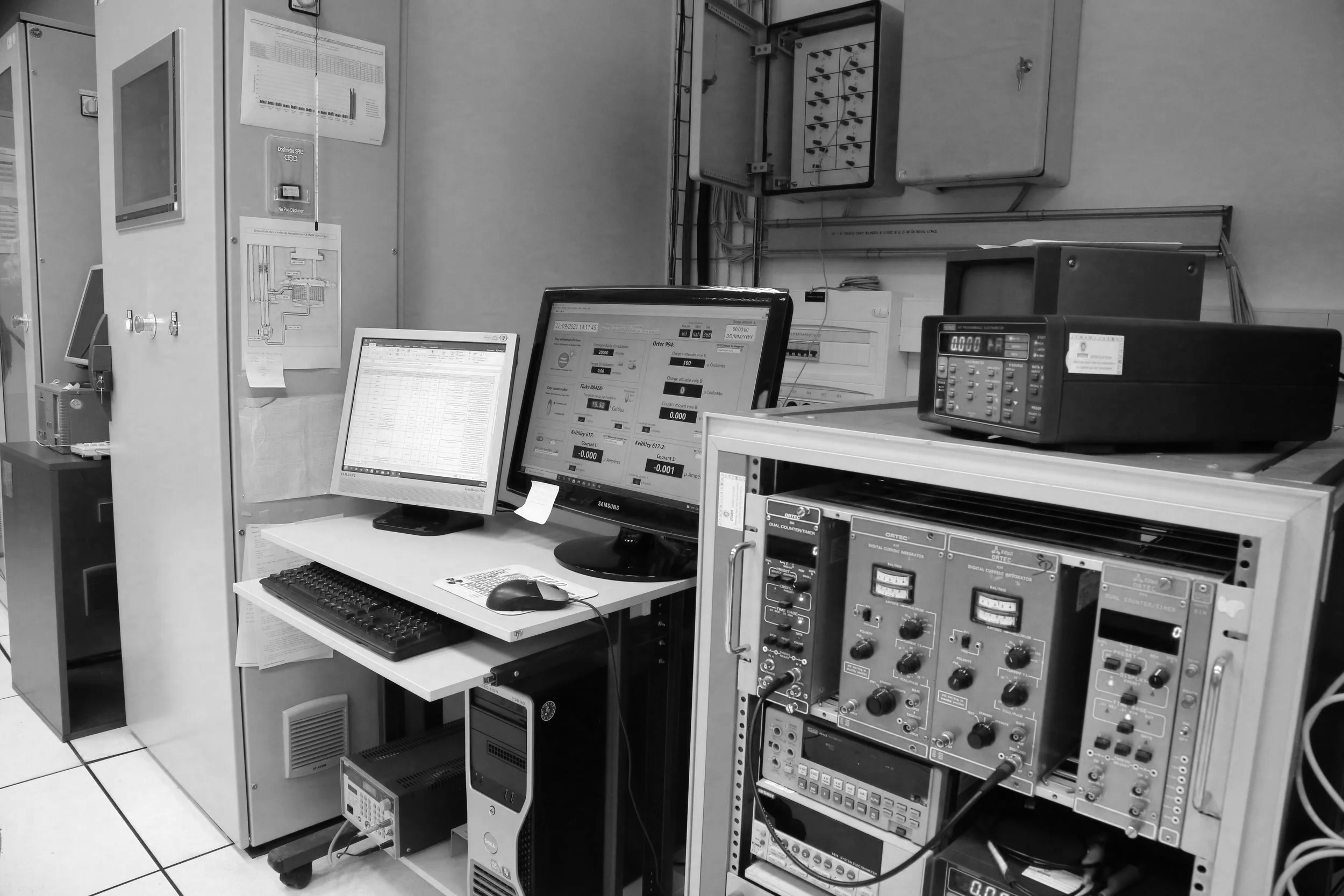
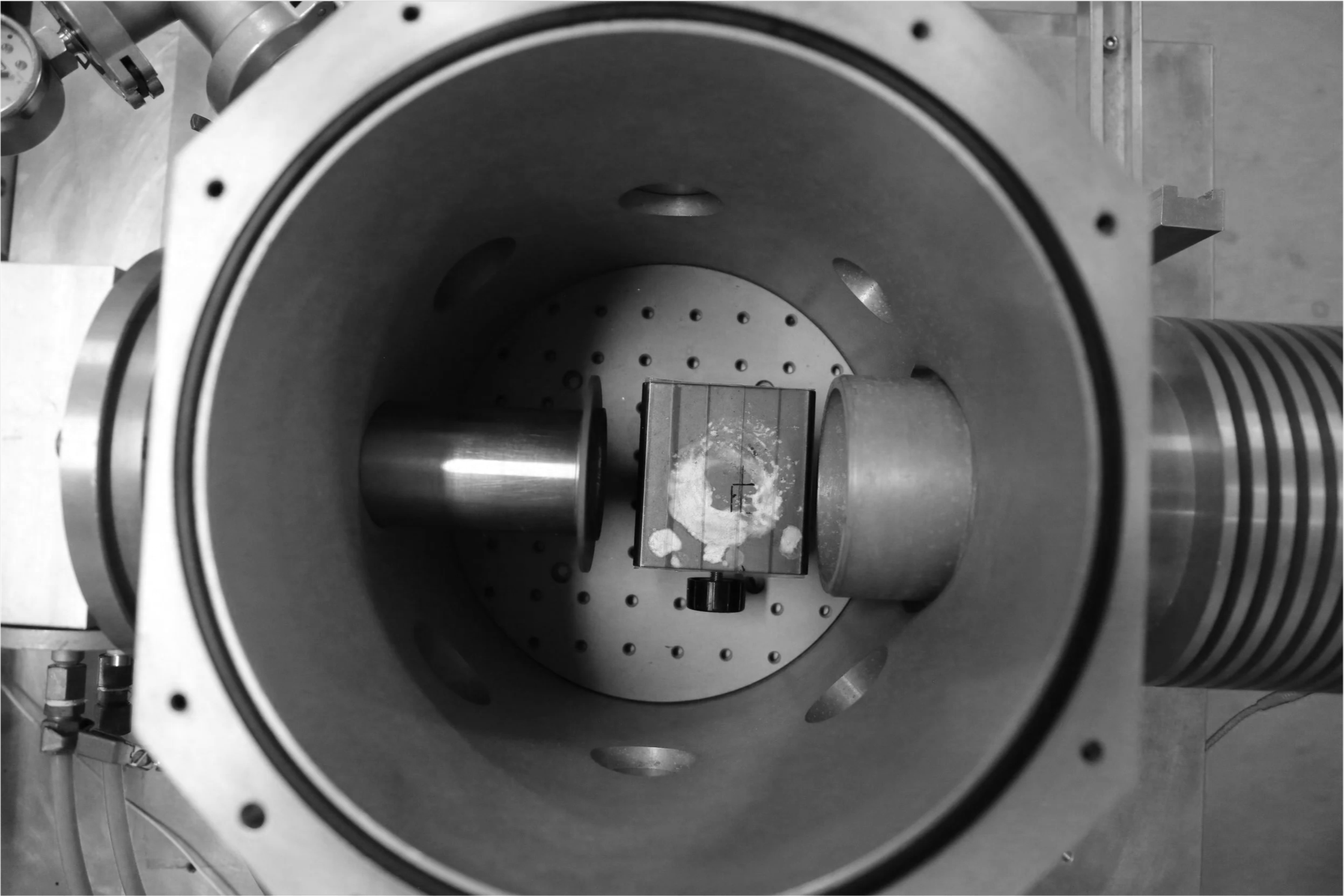
The process required the use of an electron accelerator, which is obviously not easy to access. Through the EMIR network of electron accelerators, Emile De Visscher could access the SIRIUS accelerator, generating 1MV speeds. Located in École Polytechnique in Palaiseau, Saclay, the use of the irradiated instrument was, in itself, an amazing dive into the ways of being of high-technologies and the care they require.
7
8
9
10
The project has been conducted with support from Matters of Activity Excellence Cluster, Humboldt Universität zu Berlin, financed by the DFG Excellence program. It was also made possible with support from the EMIR Network and the Laboratoire des Solides Irradiés Lab in École Polytechnique.
With thanks to colleagues Prof. Dr. Igor Sauer, Director of Experimental Surgery Lab, Charité – Universitätsmedizin, Berlin and Prof. Dr. Marie Weinhart, Director of Weinhart Research Lab, Freie Universität, Berlin. The scientific support of Antonino Alessi, Romain Grasset, and Olivier Cavani, Laboratoire des Solides Irradiés, École Polytechnique, Palaiseau. Marcus Lindner, Weinhart Research Group, Freie Universität, Berlin. Elisa Seban and Clara Martini, Emile De Visscher laboratory, La Courneuve.
director, camera and editing: Boris De Visscher
production: CineCeviche, Brussels
voice-over: Sophie Cazimi
additional shots from the Experimental Surgery Lab: courtesy of the Charité – Universitätsmedizin, Berlin
11
12
13
1 _ Emile De Visscher, Vascular research, 2024, movie filmed, edited and produced by Boris De Visscher, Cine Ceviche, for Able Journal Publication. Available here
2 _ Emile De Visscher, vascular electron discharge in PMMA block, test 1, 2020, conducted at LSI Lab, École Polytechnique, Palaiseau, with support from EMIR network. Credits: Palta Studio.
3 _ Emile De Visscher, vascular electron discharge in PMMA block, test 2, 2020, conducted at LSI Lab, École Polytechnique, Palaiseau, with support from EMIR network. Credits: Palta Studio.
4 _ Emile De Visscher, vascular electron discharge in PMMA block, close up 1, 2020, conducted at LSI Lab, École Polytechnique, Palaiseau, with support from EMIR network. Credits: Palta Studio.
5 _ Emile De Visscher, vascular electron discharge in PMMA block, test 5, 2022, conducted at LSI Lab, École Polytechnique, Palaiseau, with support from EMIR network. Credits: Boris De Visscher.
6 _ Emile De Visscher, vascular electron discharge in pure PLA block, test 1, 2022, conducted at LSI Lab, École Polytechnique, Palaiseau, with support from EMIR network. Credits: Emile De Visscher.
7 _ Electron generation chamber, SIRIUS Installation, LSI Lab, École Polytechnique, Palaiseau. Credits: Emile De Visscher.
8 _ Electron accelerator irradiation room, SIRIUS Installation, LSI Lab, École Polytechnique, Palaiseau. Credits: Emile De Visscher.
9 _ Control room, SIRIUS Installation, LSI Lab, École Polytechnique, Palaiseau. Credits: Emile De Visscher.
10 _ Shooting chamber, SIRIUS Installation, LSI Lab, École Polytechnique, Palaiseau. Credits: Emile De Visscher.
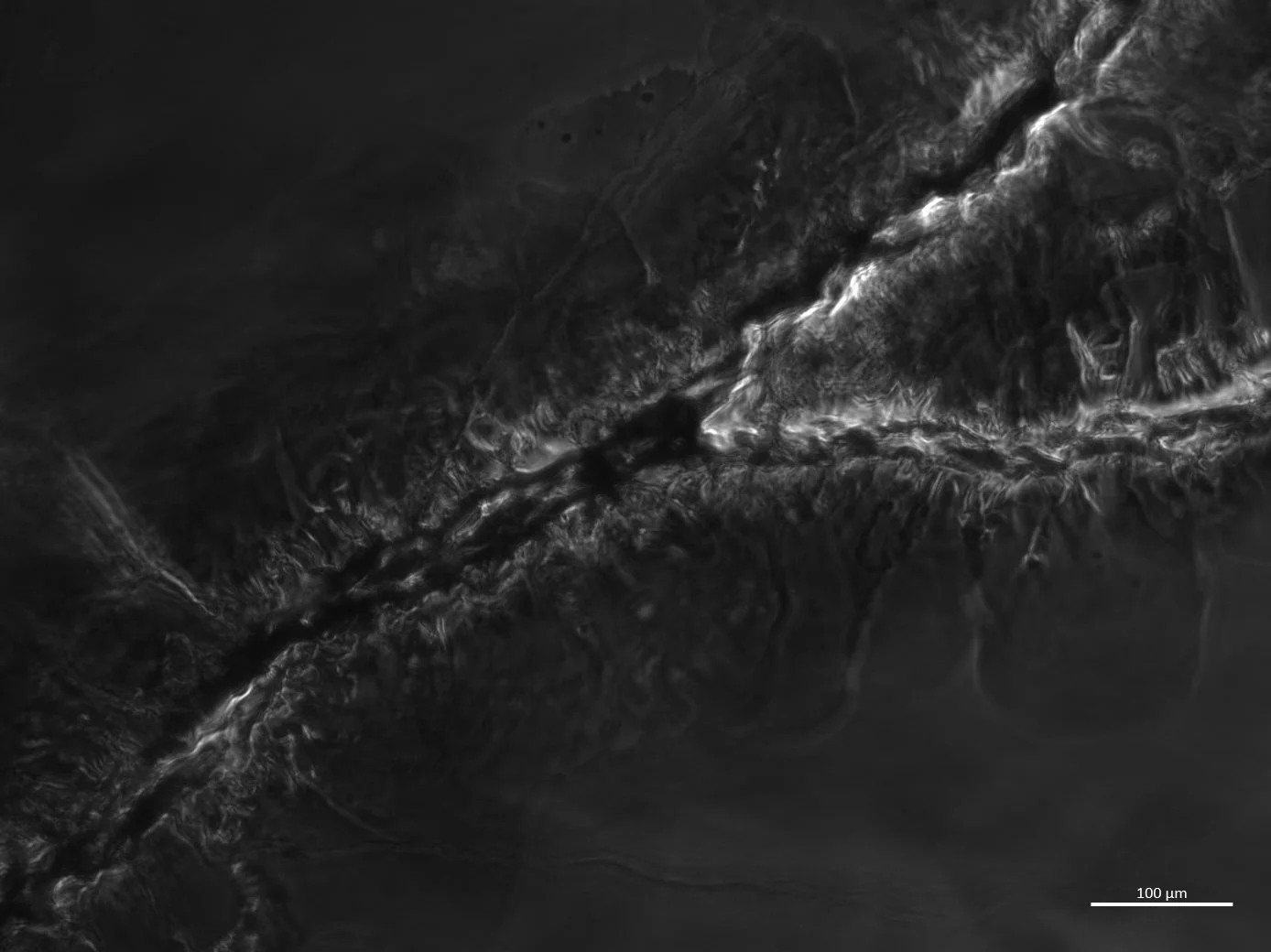
11 _ Microscop observation of the pathways of liquids inside the vascular network, with support from Marcus Lindner, Weinhart Research Group, Freie Universität, Berlin. Image credits: Emile De Visscher.
12 _ Microscop image of bubble in the network, with support from Marcus Lindner, Weinhart Research Group, Freie Universität, Berlin. Image credits: Emile De Visscher.
13 _ Emile De Visscher, vascular electron discharge in PMMA block, close up 1, 2020, conducted at LSI Lab, École Polytechnique, Palaiseau, with support from EMIR network. Credits: Palta Studio.