Emile De Visscher is Junior Professor in the Design Research MA program at ENS Paris Saclay, along with Telecom ParisTech and ENSCI-Les Ateliers. He directs and follow practice-based design PhDs in the associated laboratory, the Centre de Recherche en Design. He is also regularly invited to conduct workshops or follow students in european design and architecture schools. In this context, pedagogy is a way to build and test ideas, concepts and experimental methodologies.
PHD DIRECTION
-
PhD thesis, CDSN, ENS Paris Saclay, UP Saclay.
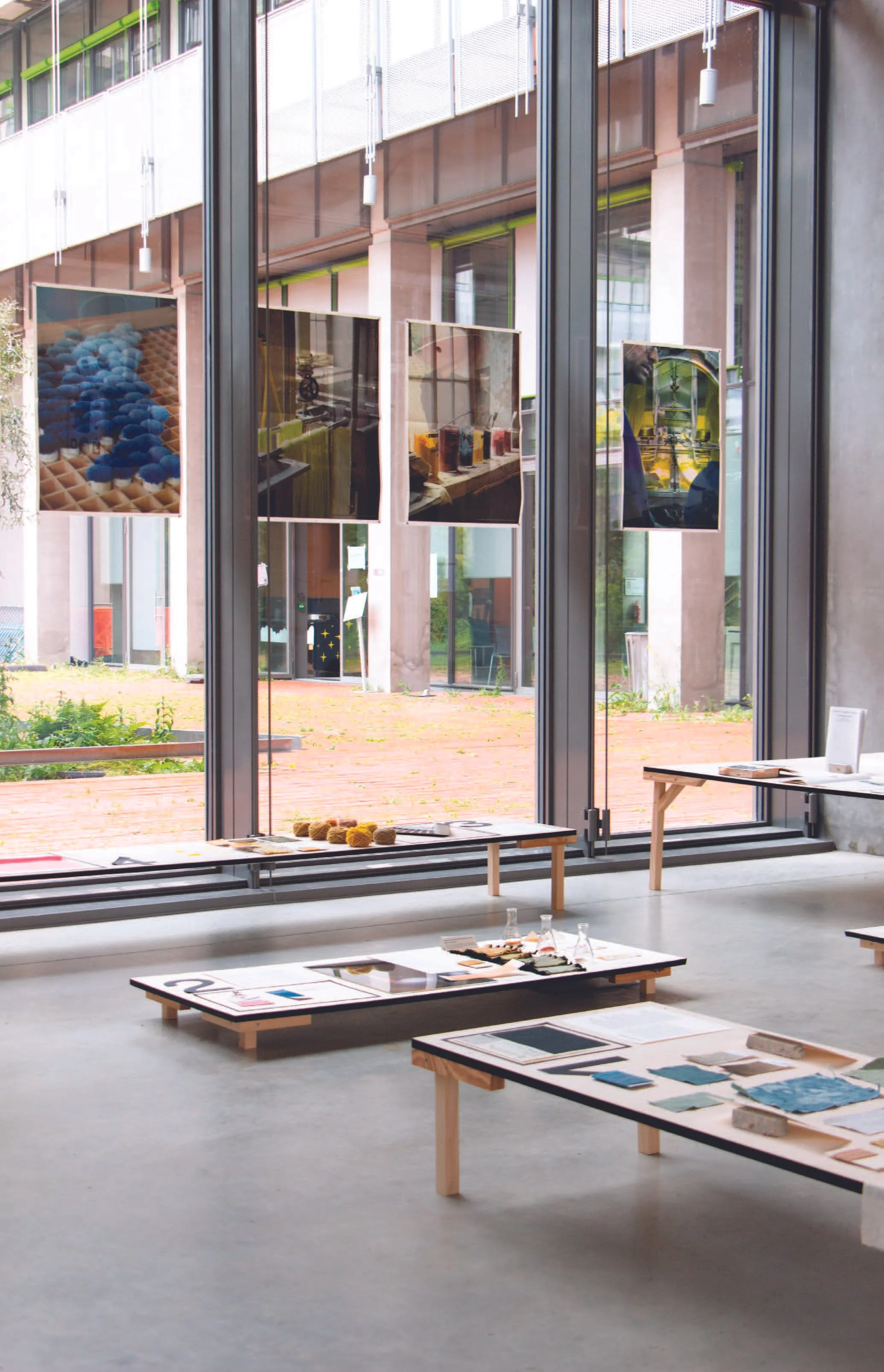
Under the direction Emile De Visscher (CRD), co-direction Loïc Bertrand (PPSM) and James Auger (CRD).Abstract: While significant efforts have been devoted to improving the technical performance of dyeing processes, such advances alone have proven insufficient in confronting the scale of the environmental impact of this process (Kant 2012). This research therefore proposes to shift the focus toward a critical examination of the specifications traditionally imposed on designers that I observed as a color and material designer in industry. In particular, it interrogates whether certain cultural expectations (both aesthetic and technical) linked to dyeing may themselves be reconsidered. By questioning these constraints, the study seeks to explore the potential for new aesthetics, alternative production scenarios, and innovative modes of use that could collectively contribute to reimagining what is a colored textiles within a sustainable and resilient future.
Using a systemic approach, the project examines the contemporary system of textile color design through both literature and field studies. The data gathered from this investigation are analyzed taking inspiration from the Reconstrained Design (Auger, Hanna, Encinas 2017) and the Paleo-Inspiration methodology (Bertrand et al. 2018). The method applied consists of identifying the design constraints that currently govern practice and critically interrogating their necessity and their historical construction. Through a hybrid multidisciplinary approach blending design, chemistry and engineering we confront these constraints with experimental and practice-based approaches. The research questions the shape of design support tools like color charts and design interfaces and how they influence the way we create as designers. The research develops an alternative design paradigm through color design support tools that opens pathways for ecological transition.
2024-ongoing.
-
PhD thesis, SACRe program, held at EnsadLab, the research laboratory of ENSAD, PSL University
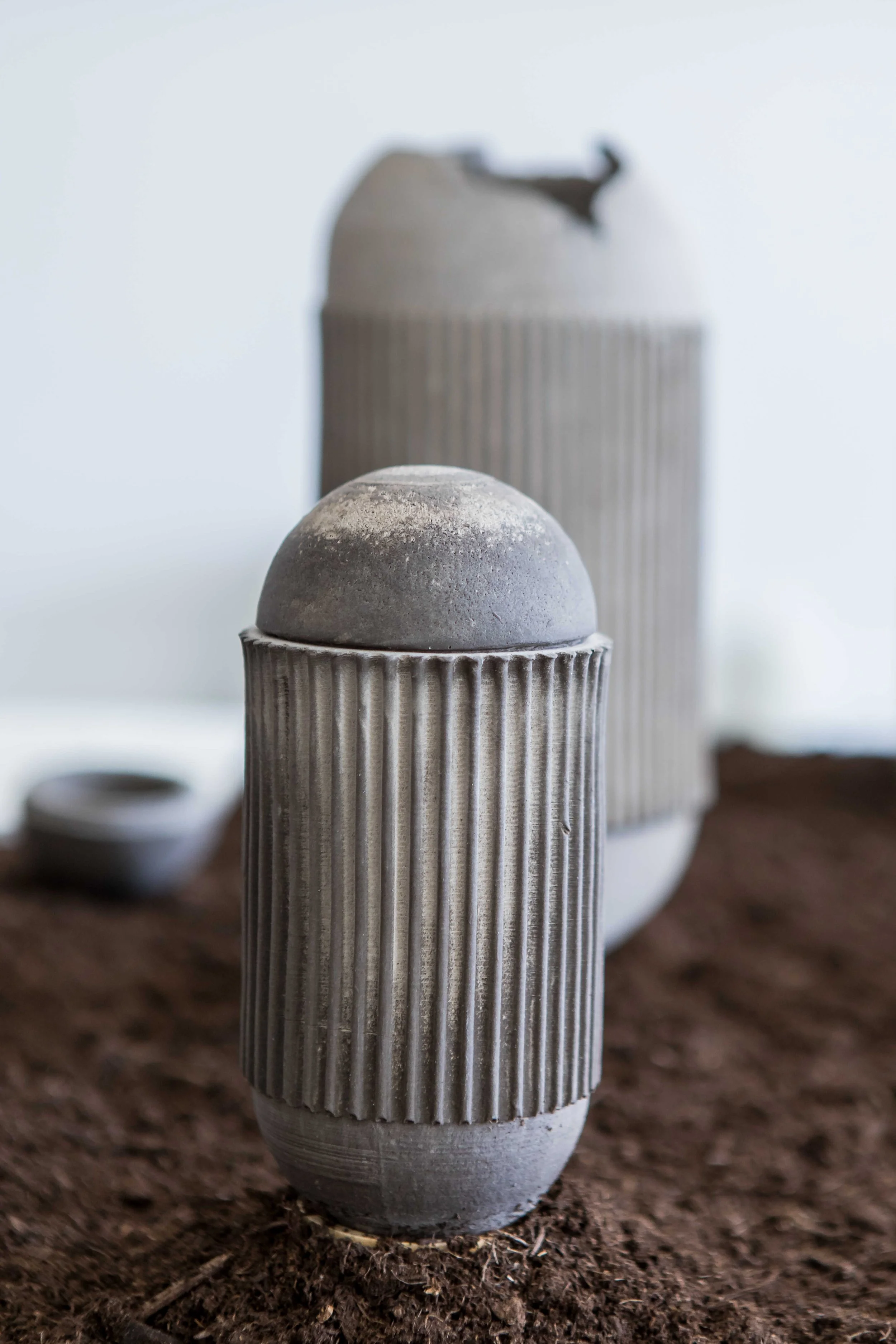
Under the direction of Jean-François Bassereau (Soft Matters, EnsadLab), co-direction Emile De Visscher (CRD).Abstract : The ecological crisis invites us to rethink our ways of producing and consuming, particularly through the concepts of resources and energy. However, the advent of petrochemicals in the 20th century has revolutionized our relationship with materials, gradually shifting from “found materials” chosen for their proximity and ease of access to “custom-made materials” (BRECHET, 2013) modeled and formulated to meet technical and industrial requirements. As the ultimate residue of what has been through fire, ashes are one of the protean materials circulating within the physical-chemical, technical, and symbolic spheres. While their properties are an essential parameter in the production of materials (since they can be measured instrumentally), their cultural, historical, and symbolic dimensions allow us to account for their significant values.
By exploring the possibilities for transforming ashes, it becomes possible to imagine their potential not as residual material but rather as “material for creation” (BASSEREAU AND MOSSE, 2019) , transcending the regulatory and cultural dichotomy between product and waste. To do this, we consider the material complexity of ash using a “transcalar” approach (COTELLON AND COCHET, 2023):
1. COMBUSTION, THEREFORE FIRE AS A PHENOMENON, ENERGY, AND TECHNIQUE;
2. ASH DEPOSITS, SCATTERED AND DIFFERENTIATED;
3. MATTER AT THE MOLECULAR LEVEL, ALLOWING ITS PROPERTIES TO BE IDENTIFIED;
4. THE HISTORICAL, CULTURAL, AND SYMBOLIC VALUES OF THE MATERIAL;
5. ARTIFACTS, PRODUCED THROUGH TECHNICAL PROCESSES AND DEVICES;
6. THE GLOBAL SYSTEMIf we take the industrial context of biomass combustion as an example, the associated ash deposit can be a vector for innovation. In addition to being a renewable resource, wood energy generates a (by-)product that can be recovered. However, the physical and chemical variability of ash hinders its recovery due to current regulatory requirements. How, then, can we consider these polysemic materials, if not by sketching out a new practical and conceptual framework for their rehabilitation, based on research methodology grounded in design practice, positioned at the heart of a multidisciplinary ecosystem that enjoys a symbiotic relationship between thinking and doing.
2024 - ongoing
PHD SUPERVISION
-
CIFRE PhD thesis at ERPI Lab, Lorraine University, Nancy, and La Vigotte Lab association.
Direction Laure Morel (ERPI), co-direction Laurent Dupont (ERPI), co-supervisor Catherine Geel (ENSAD Nancy) and Antoine Daval (La Vigotte Lab).Emile De Visscher is member of the CSI, along with Meriem Fournier (Silva, Université de Lorraine).
Abstract: Faced with the unsustainability of our globalized systems and their logic of infinite growth in a world of finite resources, it is essential to find other ways of organizing design, production, and consumption within our own territories. This is why designers, who have played a significant role in shaping this capitalist mindset and who, thanks to their training, have mastered certain keys to facilitating change, appear to be relevant players in this quest for a new territorial organization. Based on bioregional theory, which emphasizes the delimitation of regions according to their natural characteristics and advocates an understanding of our living environment in order to better invest in it in a resilient and regenerative manner, the doctoral student will draw on her training in design, her territorial roots, and her future training at the ERPI (Innovative Processes Research Team) laboratory to explore the possibility of setting up a bioregional system in the hamlet of La Vigotte (88).
2024-ongoing
-
PhD thesis, SACRe program, EnsadLab, the laboratory of ENSAD, PSL University.
Phd direction Jean-François Bassereau (Soft Matters, EnsadLab), co-direction Nounja Jamil (Manufacture des Gobelins).Emile De Visscher is member of the CSI, together with Elsa MARGUIN-HAMON (École nationale des Chartes) and Nadja GAUDILLIERE-JAMI (Royal Danish Academy).
Abstract: The thesis assumes that it is possible to convey information about materials through samples, as proposed by the Institute of Making (London), using Michael Ashby's diagram as a method of graphical representation.
Using Ashby's diagram as a classification to represent material properties requires knowledge of previously measured quantities, as well as an understanding of the relationship between quantities and properties. These types of parameters are often overlooked by practitioners who are familiar with the shaping of materials from a technical and organoleptic perspective. I note that it would be possible to construct color charts and reference systems, in line with the work of Jean-François Bassereau, which meet selection expectations with a view to making creative choices. In this regard, the Research-Creation theses are a striking example of these possibilities created from samples.
2022-ongoing
MASTER PROGRAMS
-
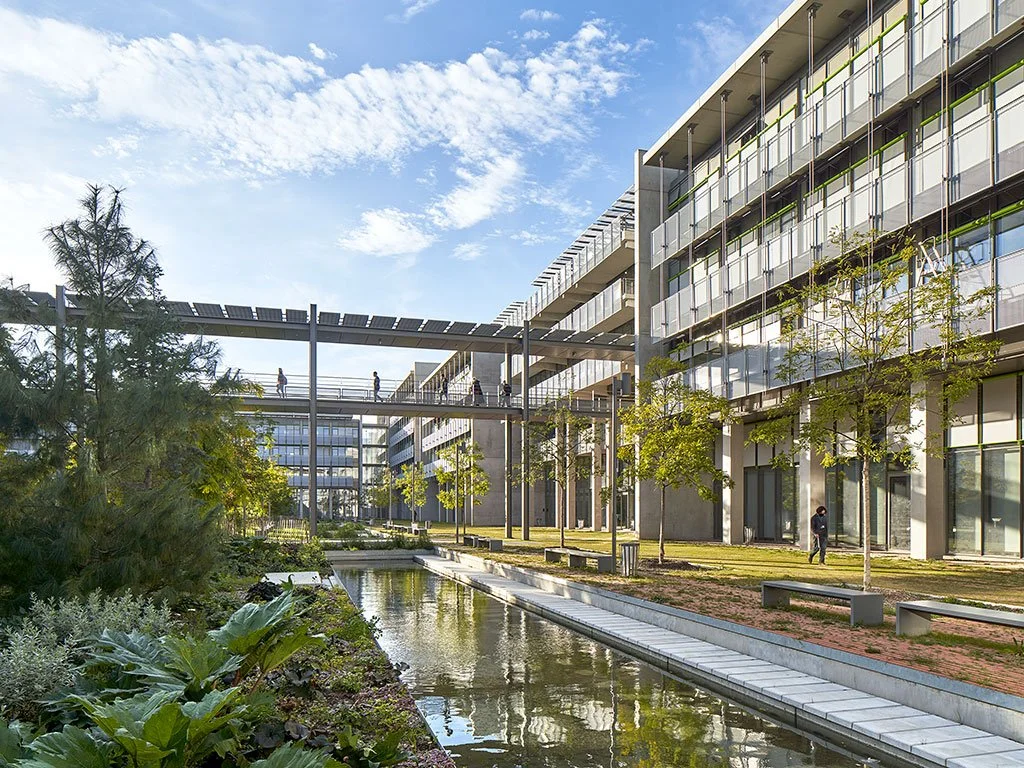
Permanent teacher in the M1 and M2 of the Design Research MA program held together between ENS Paris Saclay (UP Saclay), Telecom ParisTech (IPP) and ENSCI-Les Ateliers.
Design at the École normale supérieure Paris-Saclay is approached from a multidimensional perspective that incorporates research in the humanities, contemporary technological issues, and heritage questions. Students are trained to think about design not only in aesthetic or functional terms, but also in terms of its social, cultural, political, and historical impact. This includes training in the history of objects, techniques, and ideas, as well as prototyping and manufacturing practices, and research methodologies, particularly through the use of ethnographic, participatory, or speculative methods.
2023-ongoing.
-
Degree advisor for the CTC MS (Mastère Spécialisé) program at ENSCI-Les Ateliers, program under the direction of Aurélien Fouillet.
This master's degree offers creative professionals and recent graduates the opportunity to experiment with new technologies and their impact on our professional practices. From electronics to biomimicry, this program allows students to implement new methods, tools, and approaches within their projects and to understand the industrial challenges of the contemporary world. With classes, workshops, studios, documentation, conferences, competitions, and a creative ecosystem, this master's program allows students to experience creation at ENSCI-Les Ateliers.
2025-2026.
-
Teacher in the writing and documentation class for the Product Design MA program at Ecole Nationale Supérieure des Arts Décoratifs, Paris.
The Product Design department introduces students to the methods and theoretical, technical, scientific and plastic tools they need to carry out a project successfully, using design and practice. They are made aware of environmental, social, scientific, economic, philosophical and political issues. To address the issue raised by “the object” or by a study, the project starts with a thorough analysis of both the context and the users. Students develop the project culture. Then, they conduct experiments on the field or in workshops to design and make life-size prototypes and real or virtual devices.
2021-2023.
WORKSHOPS
-
Semiosphere, questioning language in design processes
Pluridisciplinary PhD summer school held at ENS Paris Saclay.
Organised by Centre de Recherche en Design (CRD), ENS Paris-Saclay / Ensci – Les Ateliers, Centre Borelli, ENS Paris-Saclay, Langues, Enseignement et Anglais De Spécialité (LEADS), ENS Paris-Saclay, Estonian Association of Architects (EEA). The workshop is part of the Speculative Urban Futures (SURF) research program, funded by ERASMUS +.Abstract: Design practice is undergoing rapid change through the rise of various forms of artificial intelligence (AI). These tools have the potential to radically reshape the discipline, from the replacing of traditional methods such as drawing and prototyping to the possibility of modelling of complex systems.
As technology redefines creative practice and design communication, a critical assessment of its strengths and implications is essential. With AI and ICT challenging ethical, political and economic values, this PhD Summer School will bring together researchers from different disciplines to explore new collaborative approaches – combining human insight with technological potential.
The SURF program is conducted by a consortium composed of ENSCI-Les Ateliers (France), Delft University of Technology (Netherlands), Elisava Barcelona School of Design and Engineering (Spain), The University of Split (Croatia) and the Estonian Association of Architects (Estonia).
More informations about the SURF program here.
June 30th – 4th July, 2025.
-
MOUSSES, Workshop at UQAM, Montreal, Canada - part of the Design International Program, invited by Aymeric Allandry.
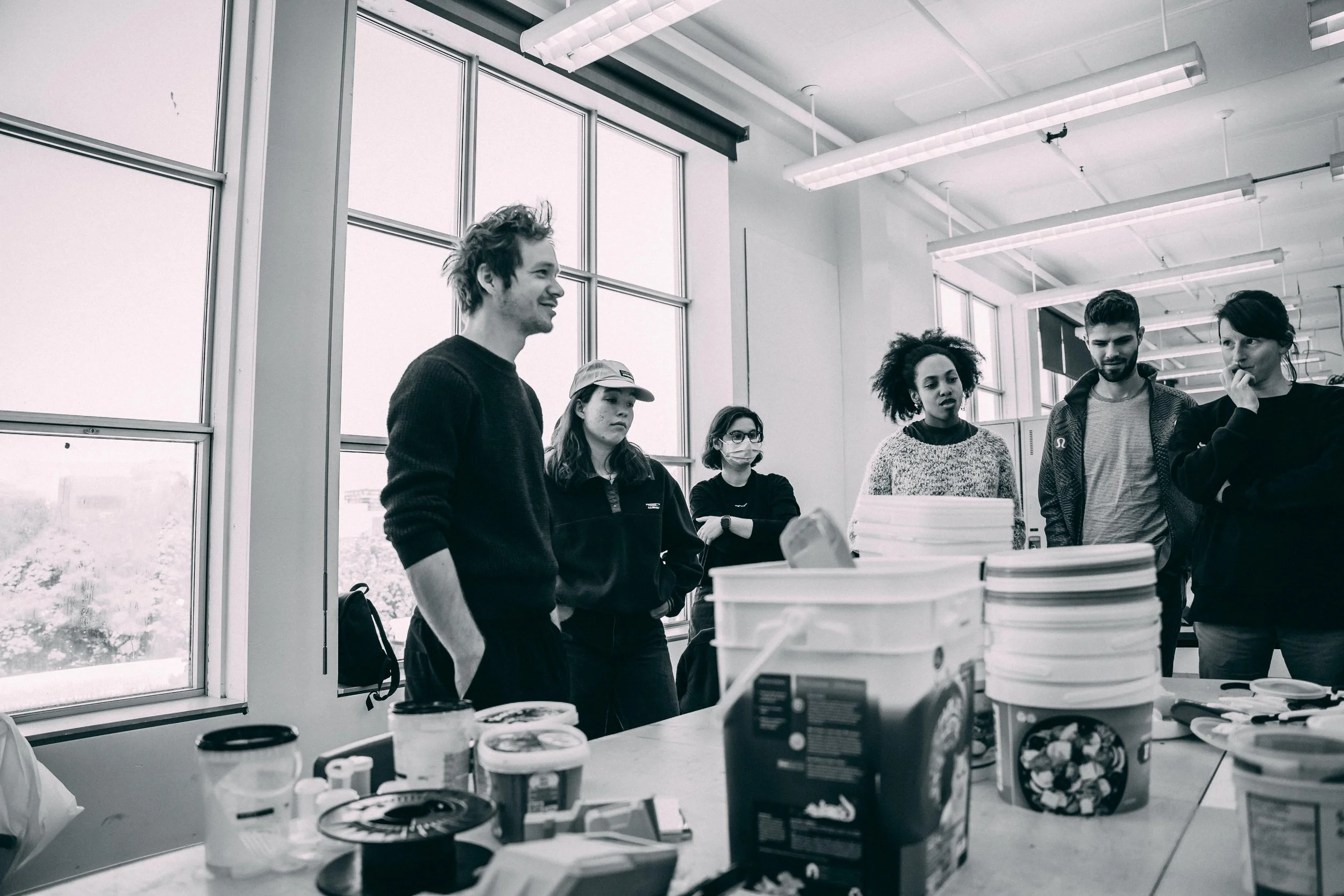
Abstract: As part of Design International, the Polyfloss workshop led by Emile De Visscher explored the formal, functional, technical, and social potential of recycled plastic wool. Students were encouraged to understand what plastics are, identify their differences, transform them into fibers, and, above all, experiment with the material through hands-on activities. As the Polyfloss project is involved in humanitarian and development projects, students were encouraged to understand the challenges and needs of these contexts, and then to imagine appropriate uses and objects. Shaping techniques, understanding emergency contexts, physical properties of materials, experimentation in workshops: the challenge of the week was to bring all these dimensions together in a very short time to come up with proposals that were speculative, but nevertheless coherent, in terms of ecological and social design.
13 - 20 May 2023.
-
Workshop “Design strategies 3”, for the Open Design MA program, conducted with Khashayar Razgandi, Humboldt Universität zu Berlin, Germany.
Brief: How to design towards ecological futures without falling into mere technical fixes or displacing the problem where it cannot be seen? Instead of designing for the existing industrial system, one can tackle this issue by envisioning other (better?) technical, political, social systems and grow solutions within these speculative fertile grounds. In this course, we will explore ways of world-building to generate radical new ideas for the future.
At the heart of the ecological crisis lies the question of scale and deterritorialization of materials and goods. The industrial system as it has been built and deployed in the 20th century is based on transport - it requires to untie the places of extraction, transformation and consumption from one another. Most of our everyday goods come from the other end of the world and the materials they are made of from yet another continent. This logic has brought us to our current ecological condition and requires a radical shift.
What happens if we project in a world where the transport of goods or people becomes extremely slow, or extremely expensive, a prospect we see looming with the announcement of oil scarcity ? Over the course of 10 days, students will be led to give form to a speculative world, and then to address creative, material and experimental approaches within the framework of this speculation, as in the tradition of design fiction. They will need to question the limits of circularity, the possibilities of multi-functional processes, active materials and environment-sensitive organisms – and evaluate which types of entanglements and exchanges would be prioritized over others.
The course will lead students to understand the potential of speculative design, in which solutions and questions grow from world-building strategies. This method force design and engineering to tie its practice into political, historical and ethical considerations.
From 20.04.2022 to 29.04.2022.
-
PSL Workshop for ITI innovation program, conducted with Martin De Bie, held at Mines ParisTech, PSL University, France.
The workshop is divided into different stages that correspond to methodological elements of the project, which are essential for making the creative process clear and understandable. The aim of this exercise is to enable PSL-ITI students to experience a methodology that can be applied to an object design project.
June 2017.
-
Polyfloss workshop for kids, part of the Pitchoune 5 festival, conducted with Christophe Machet, at Villa Noailles, Hyères, France.
Kids were invited to shred their waste plastic, transform it into plastic foam through the polyfloss cotton-candy process, and moled into bowls and bricks they could take home.
2014.
-
Shared workshop between the Product Design and Textile Design departments, conducted with Christophe Machet and Aurélie Mossé, Ecole Nationale Supérieure des Arts Décoratifs, Paris.
2015.
-
Polyfloss workshop for kids, where they could come with their waste, shred them, transform them into foam with the Polyfloss process, and them pressed into small rulers. Part of the Science Festival of Edinburgh.
2013.
-
Collaborative workshop around the Polyfloss process, conducted with Christophe Machet, Audrey Gaulard, Nick Paget, held during the Final Show at Royal College of Art, London.
2012.
For a list of lectures, conferences and keynotes, see the achievements in About section.
1 _ Clarisse Barbot, Reconstrained colouring practices for textile design, PhD thesis, CDSN, ENS Paris Saclay, Under the direction of Emile De Visscher, Loïc Bertrand and James Auger. 2024-ongoing.
2 _ Design Research MA, ENS Paris Saclay, campus by Renzo Piano Architects. Credits ENS Paris Saclay.
3 _ Workshop - Mousses, Design International program, UQAM, Montreal, 13 - 20 May 2023.
4 _ Laury Guillien, Cinerimorphose : po(ï)étique du design et récit de la matière, PhD thesis, SACRe program, EnsadLab, PSL
Under the direction of Jean-François Bassereau, co-direction Emile De Visscher, 2024-ongoing.