petrification is A rapid fossilisation process, transforming PAPER, COTTON and cardboard into stone.
1
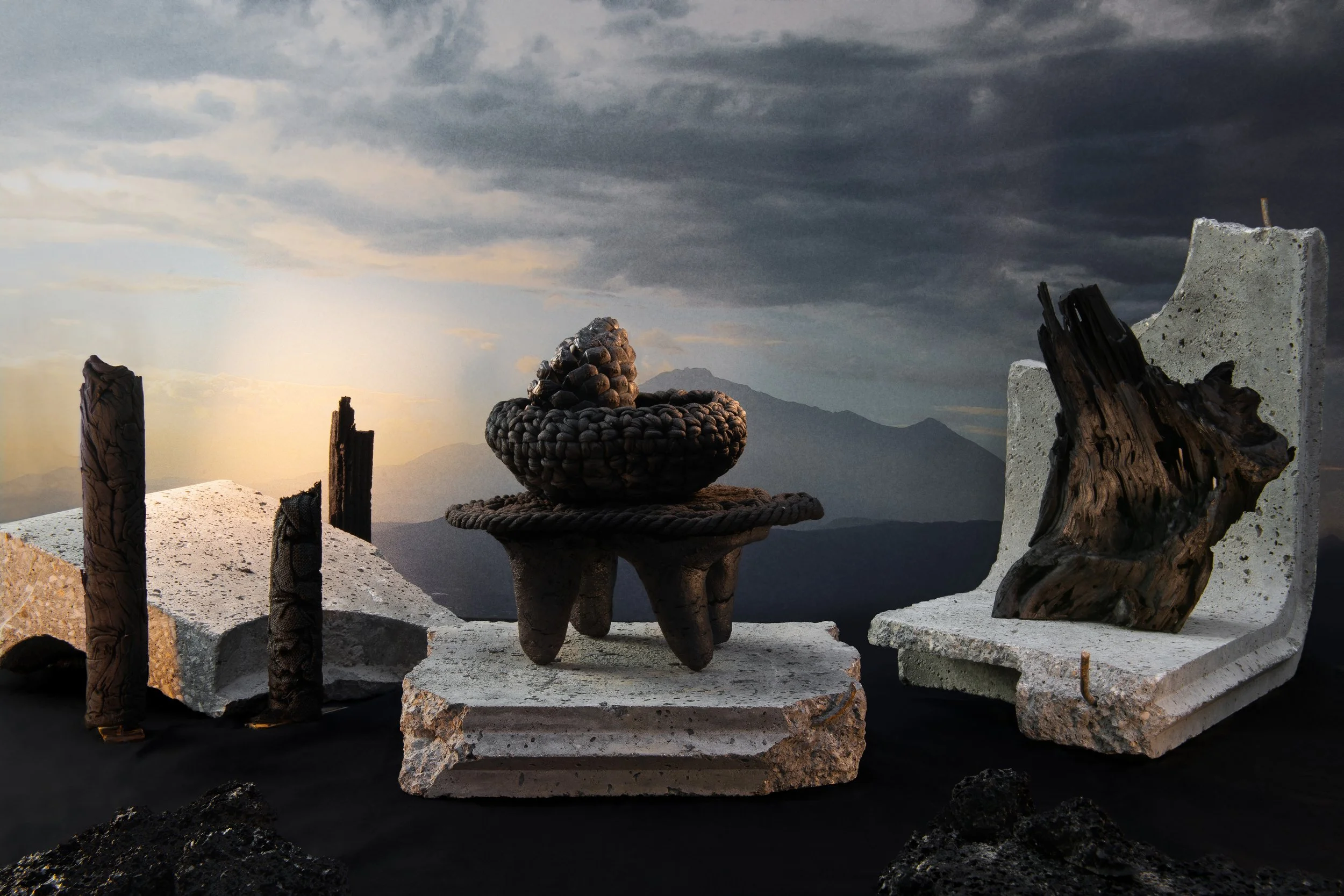
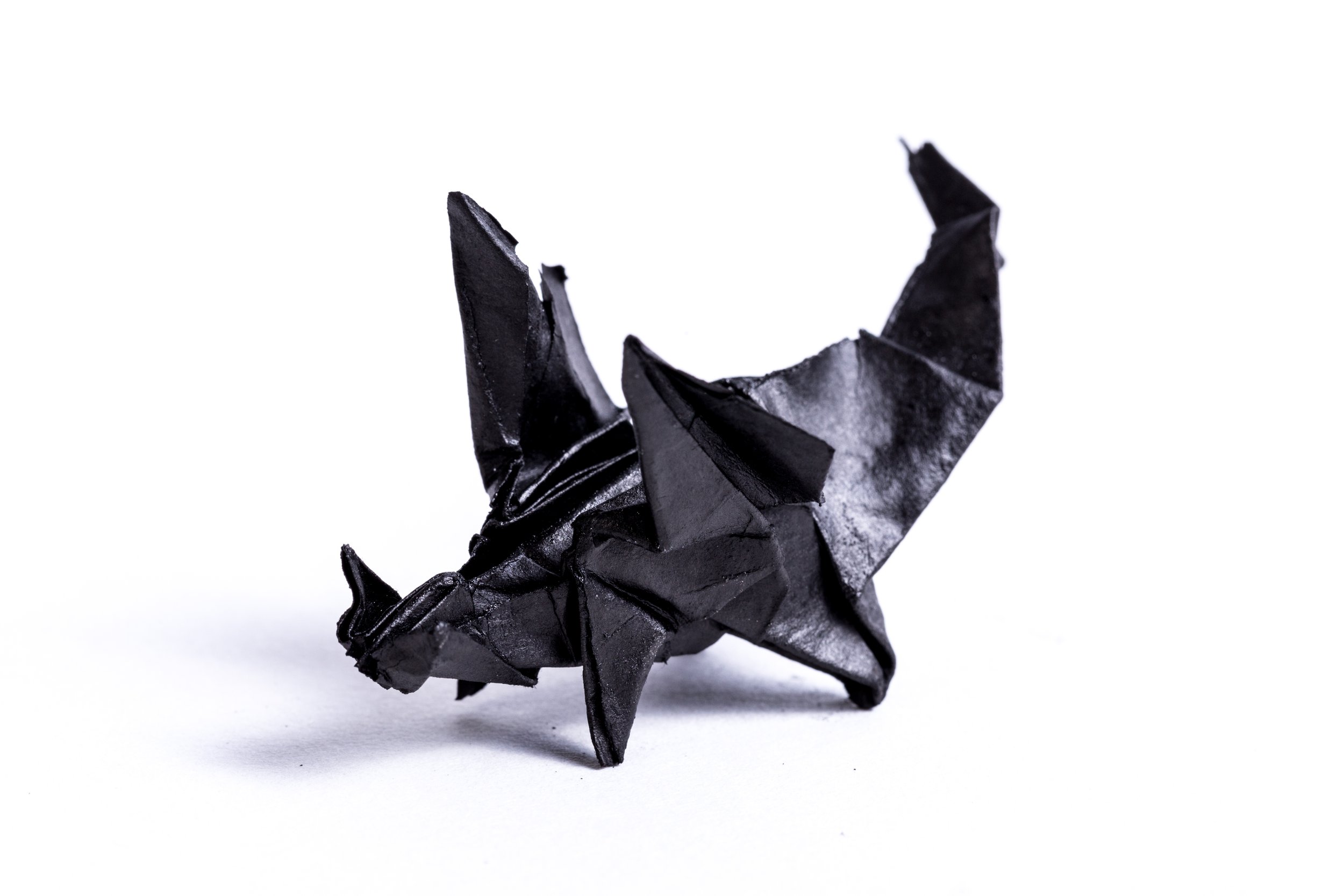
This project has two starting points. First, it looked at the renewal of local manufaturing processes using discarded or accessible materials. Paper, cardboard, paper-pulp or cotton waste is omnipresent and often used in prototyping processes. Some techniques using paper, like origami for example, are easy ways to create complex shapes. But paper or cardboard are often only used for prototyping, as they are sensitive to water and heat. Emile De Visscher thus looked for ways to transform these prototypes into stones, as to bypass all the translation steps between the prototype and the final object.
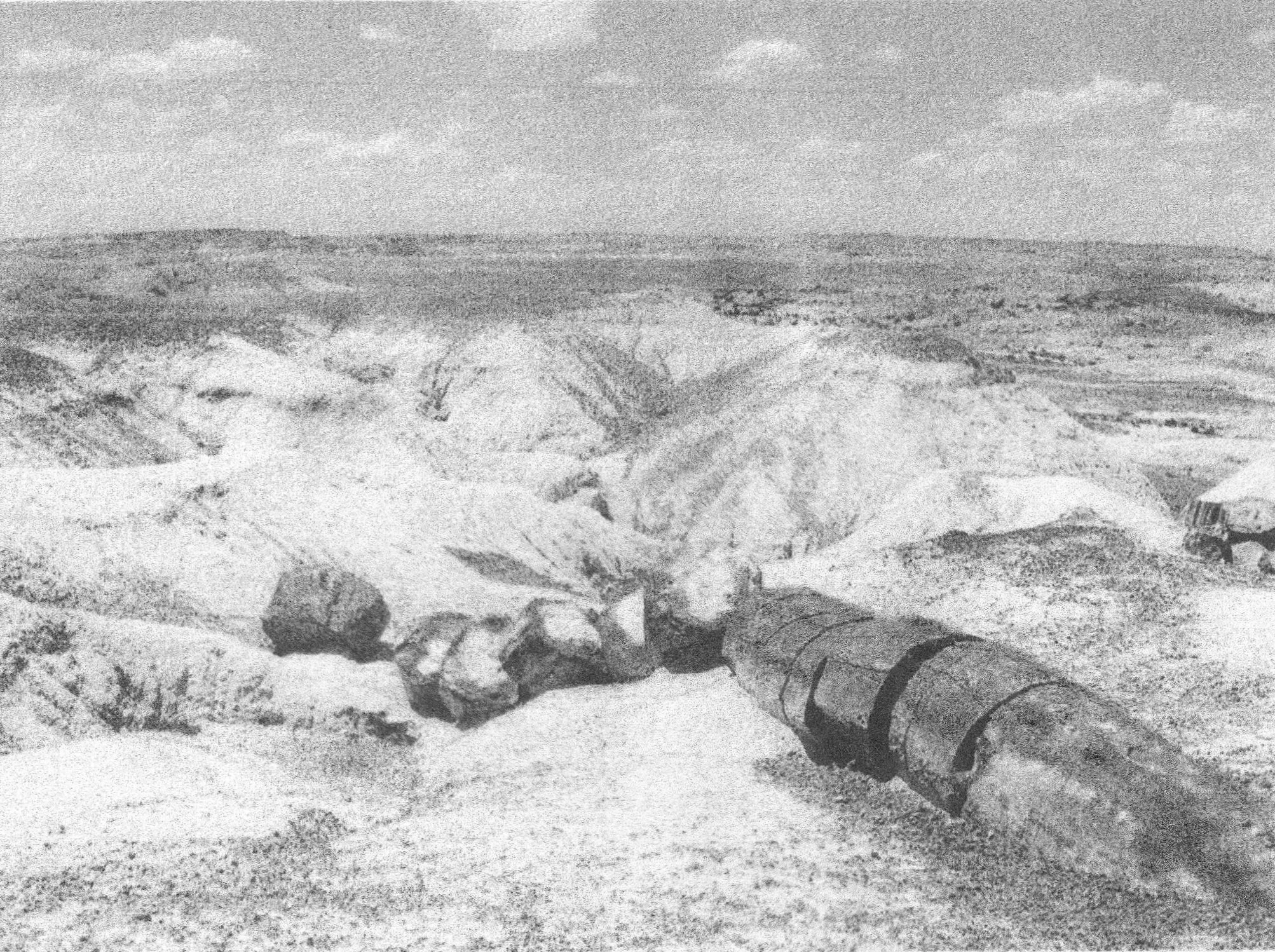
The aim was to transform organic material into inorganic material, a process present in nature and called petrification, a specific form of fossilization.
2
3
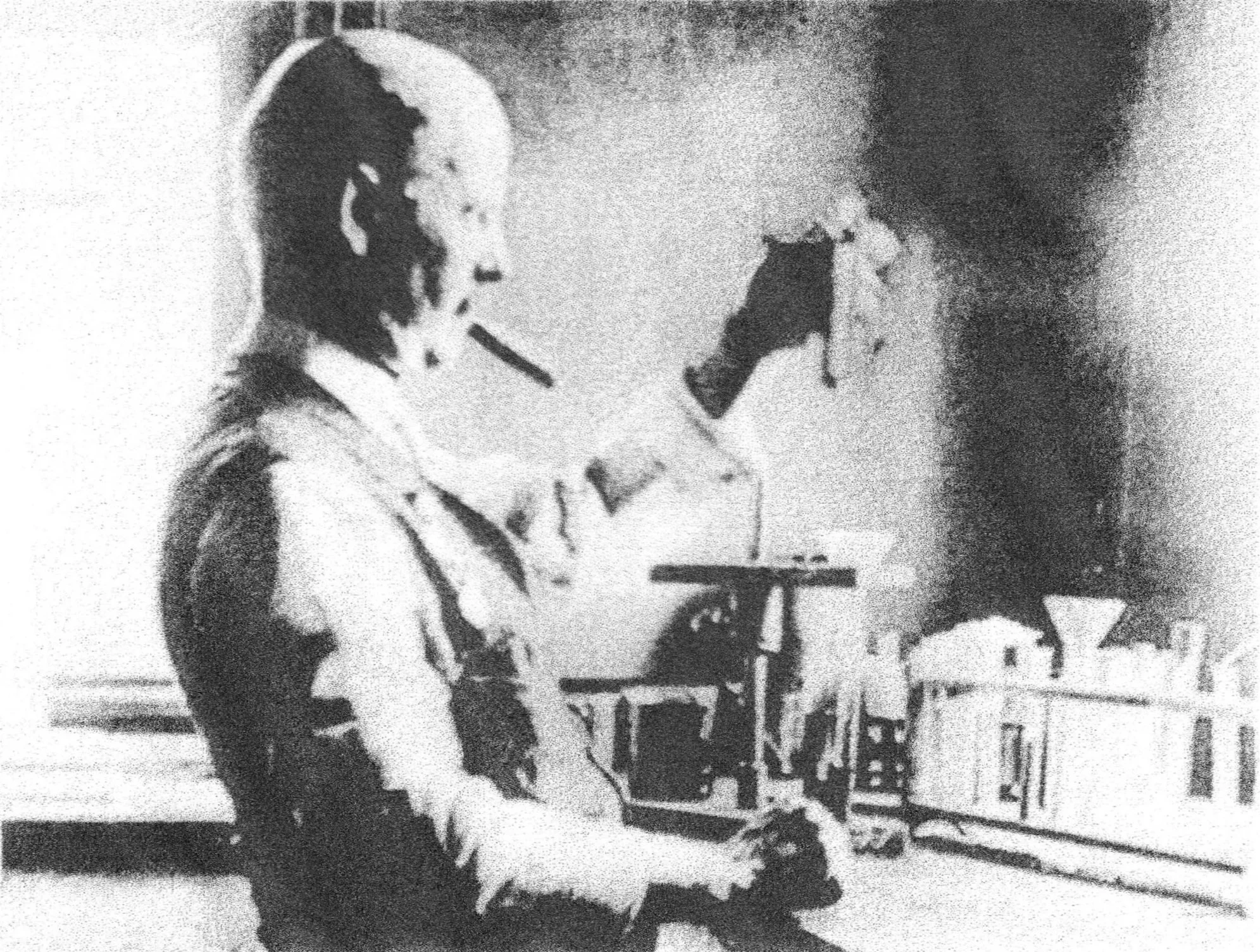
In a scientific article from a research lab in the US, material scientists suggested a way to reproduce petrification using wood and silica, fired in a pyrolysis at 1400°C. The process creates Silicon Carbide, a highly rigid crystal presenting high temperture resistance and excellent abrasive capacities. Silicon Carbide is present in nature in very small quantities, but it’s been synthetized for the first time by the chemist Edward Goodrich Acheson in 1891, when looking to produce artificial diamonds. Emile De Visscher took these reseearches and applied them to paper, paper-pulp, cotton, cardboard and wood.
4
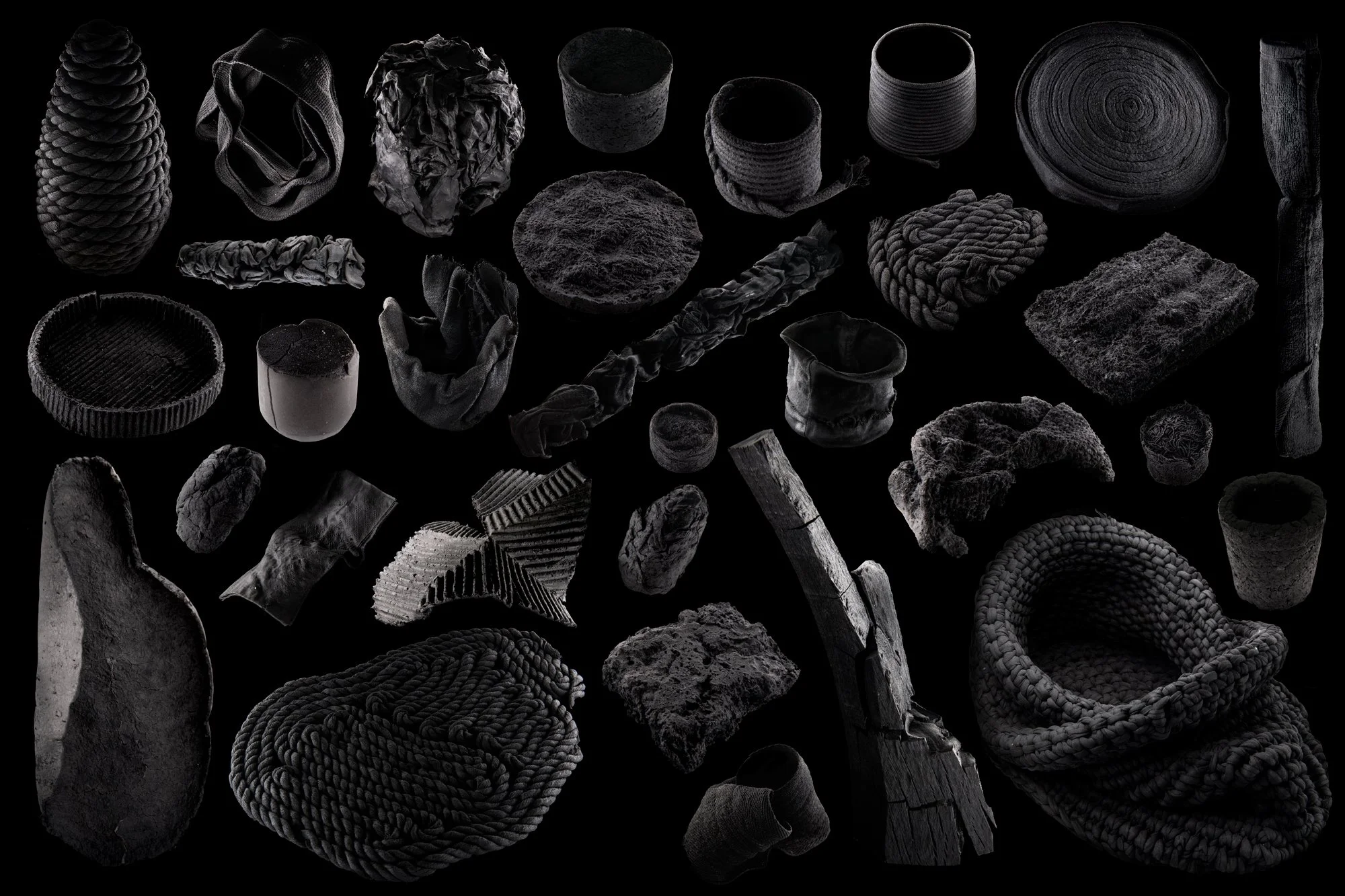
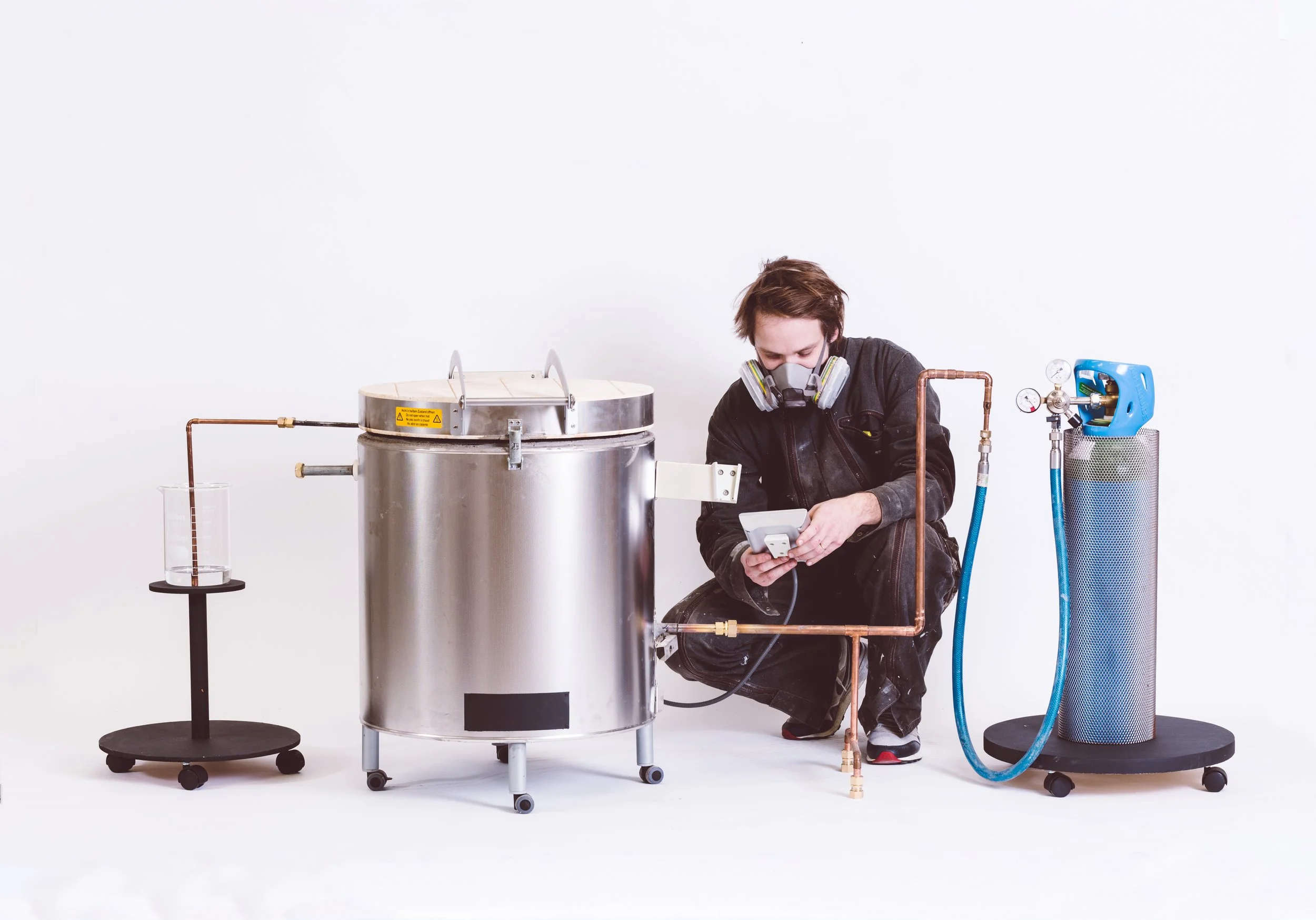
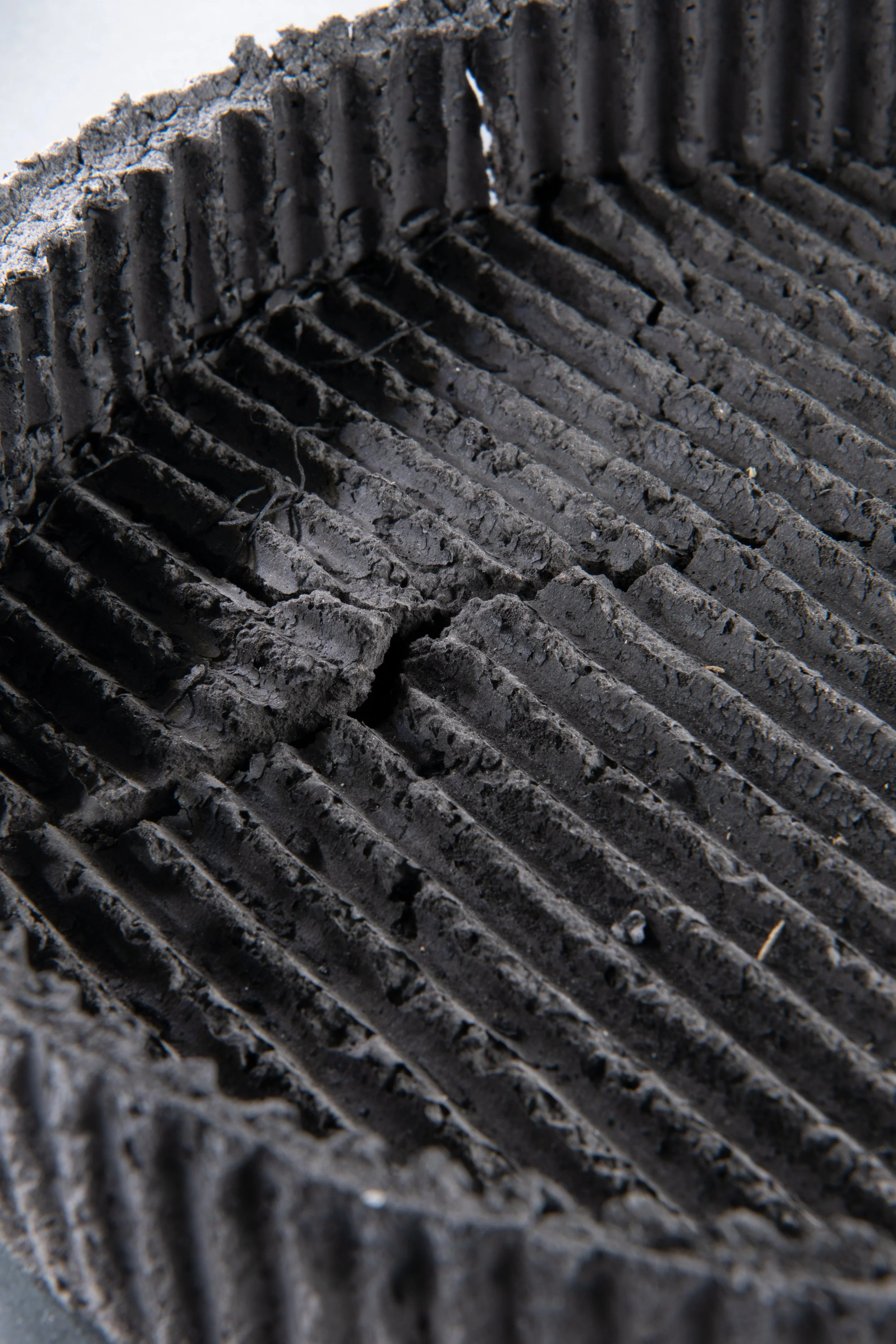
The process involves two steps : dipping the basis material into a bath charged with silica (Sol-Gel), to then place it in an atmosphere oven. Without oxygen, the piece gows up to 1300°C and transform carbon and silica into Silicon Carbide. The pieces become rigid and can be further processed, with glazing or other ceramic techniques.
5
6
7

8
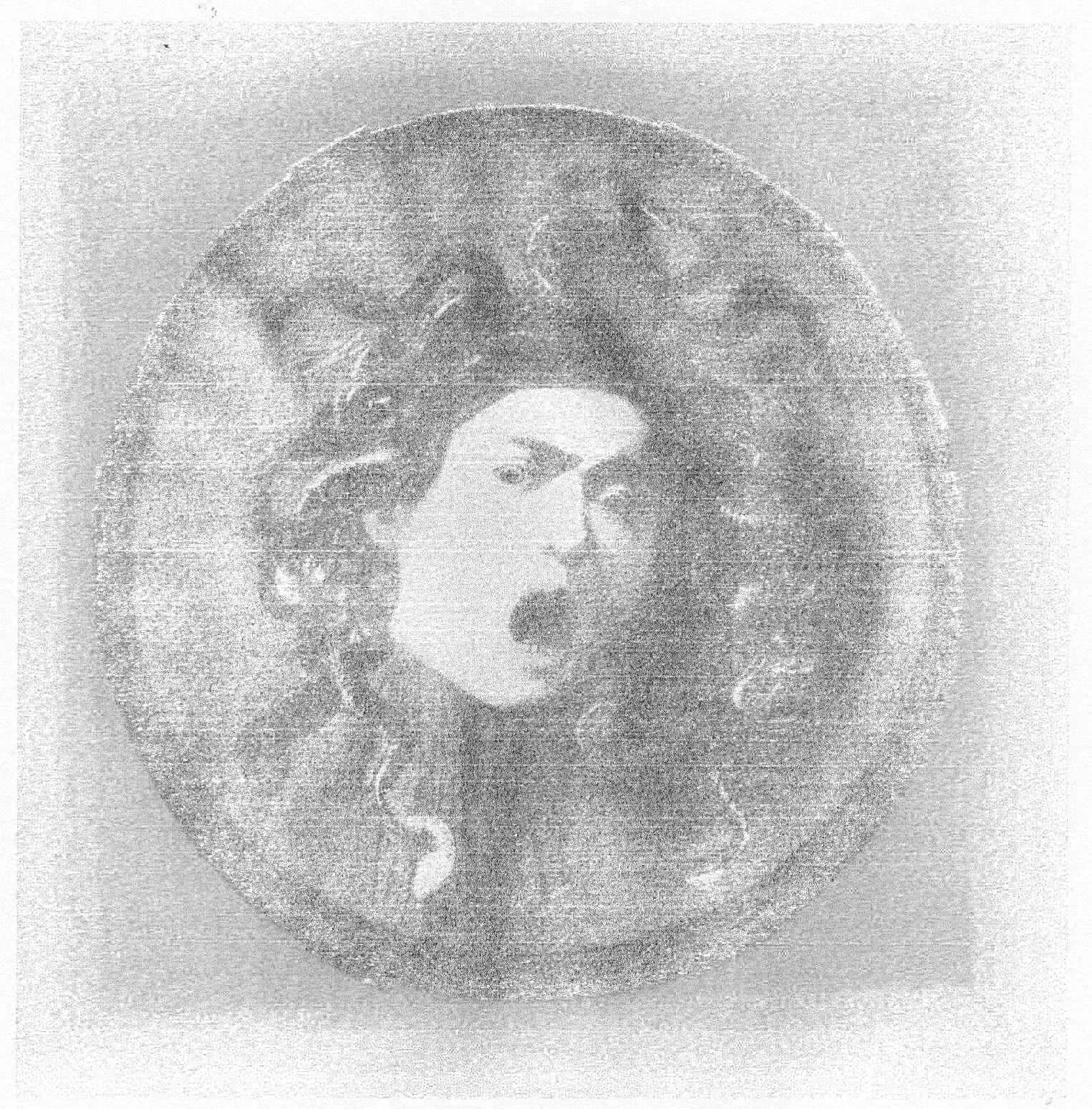
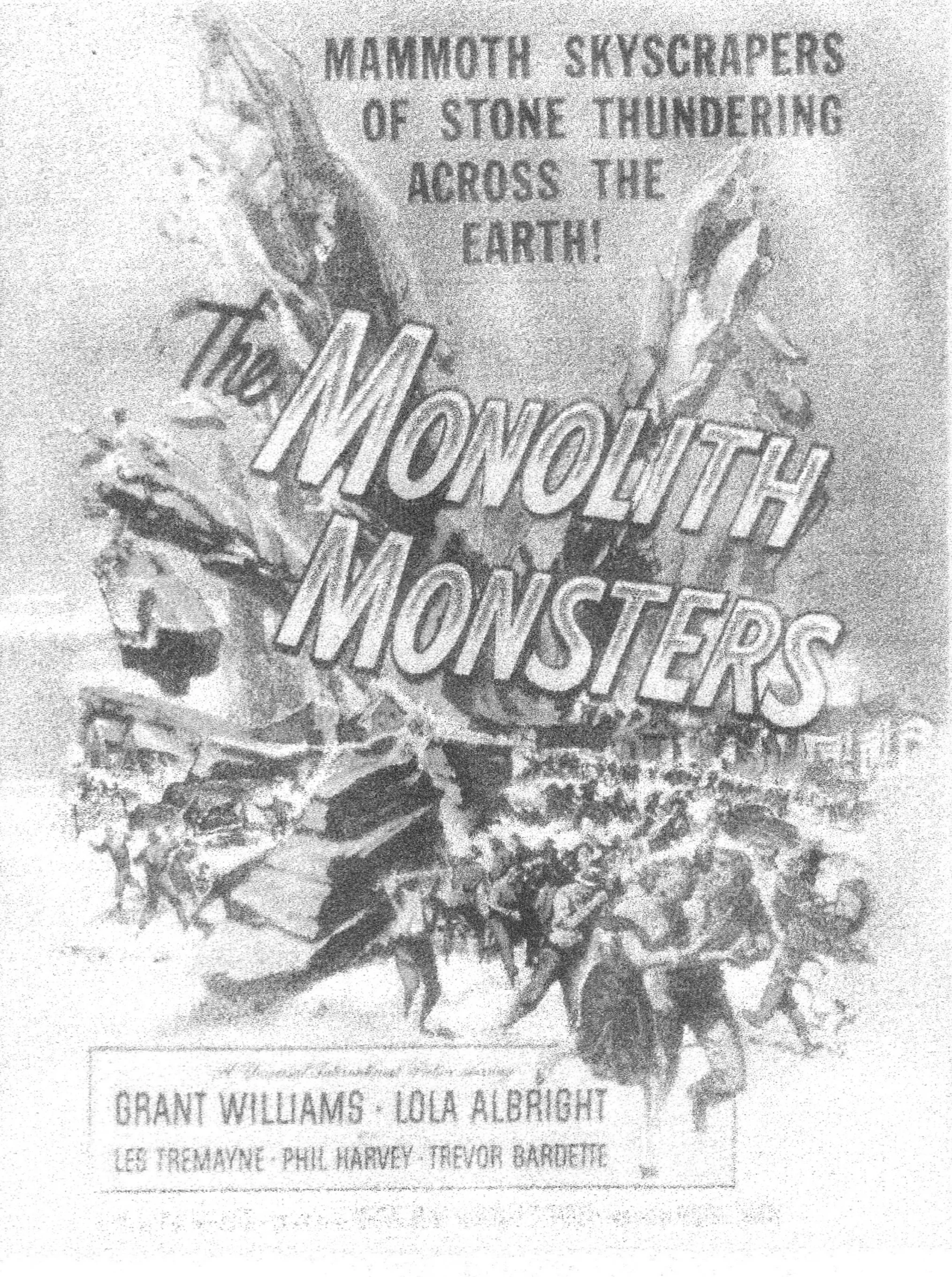
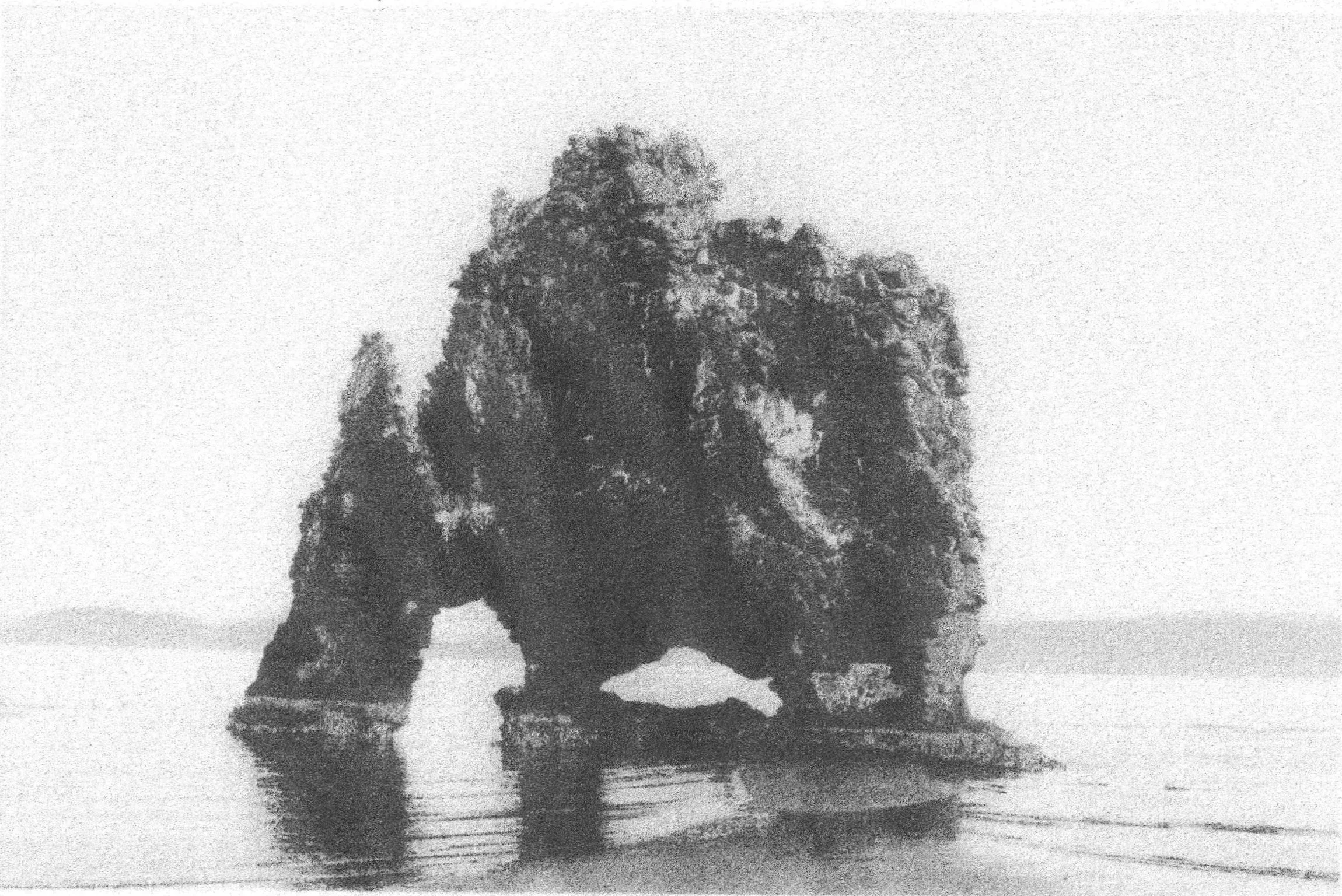
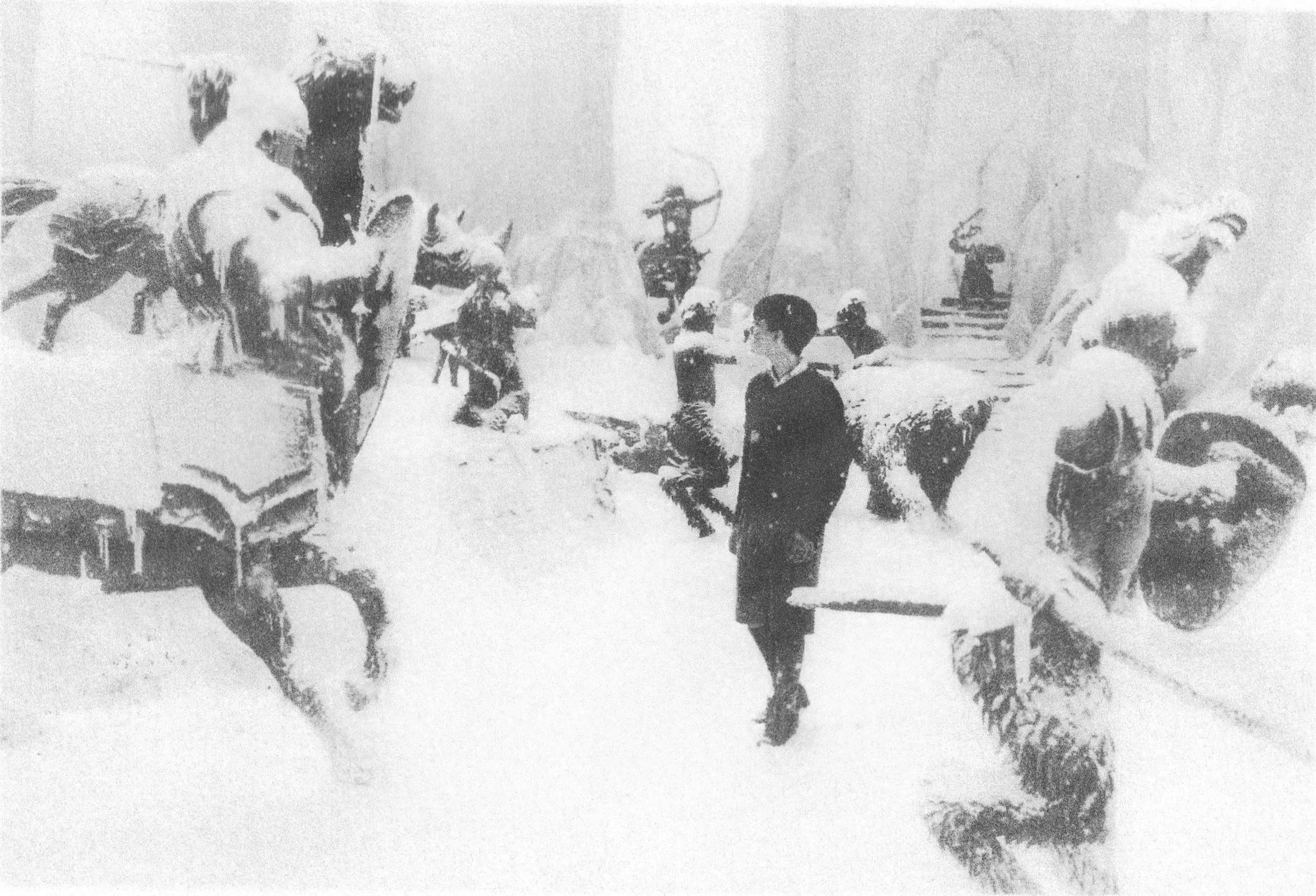
The second dimension of the project appeared along the development and addresses fundamental questions regarding the relation between technology, culture and ecology. Petrification is not a neutral process : it drags a very powerful cultural imaginary around it. From pop-culture soap SF movies, to video games down to ancient myths, the transformation of organic into inorganic material is a figure of thought questioning our relation to death, survival and permanence. It is simultanously an end and what stays beyond us.
9
10
12
11
The Petrification project thus becomes an open question : what should we, as a society, keep for the future ? What kind of materials, know-hows, species are endagered and should be transformed into stone for further generations ? Taking a form of speculative archeology, the question couldn’t be answered by one author alone : it had to take a collective dimension. Emile De Visscher thus invited other designers to use his process to explore alternative productions and narratives.
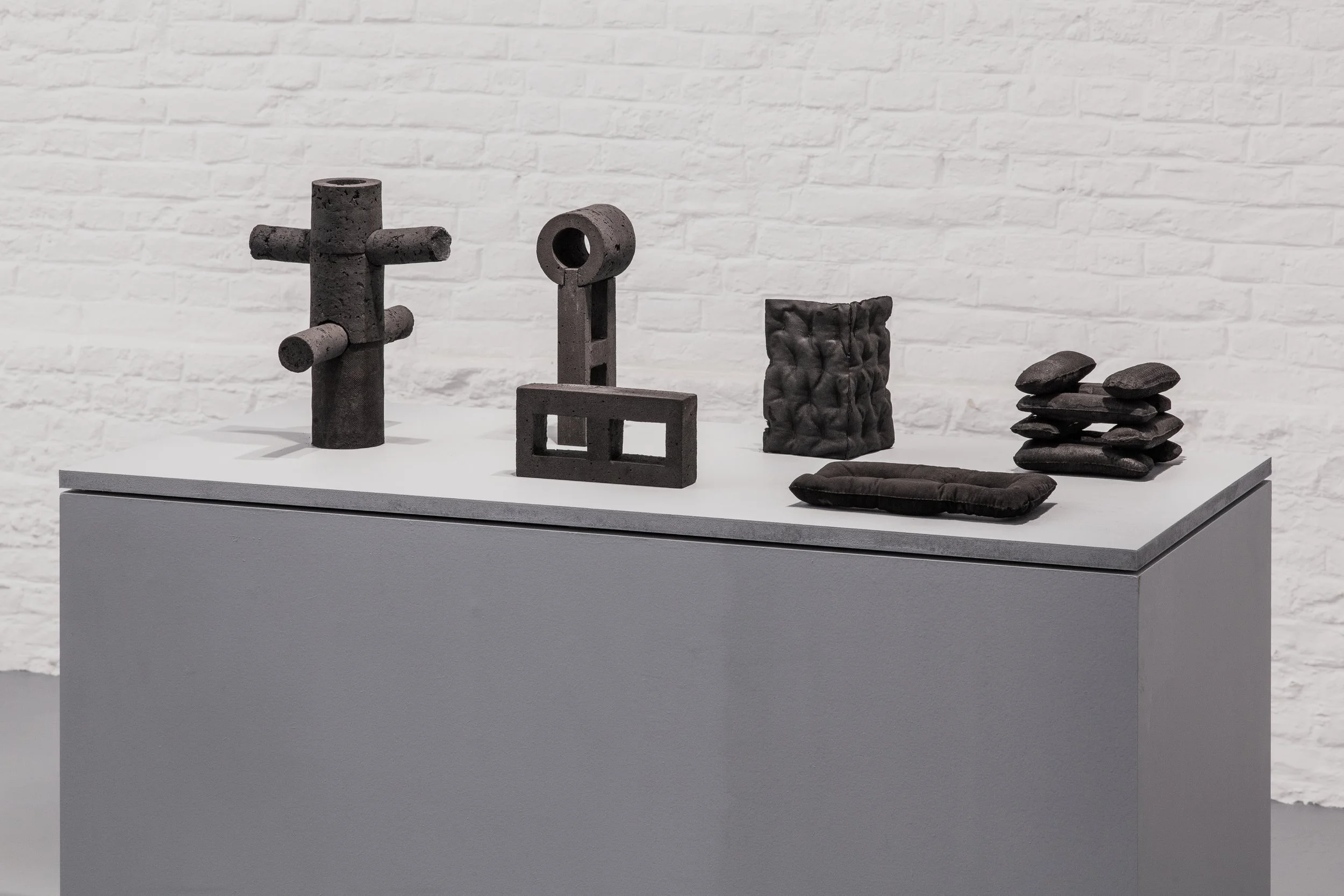
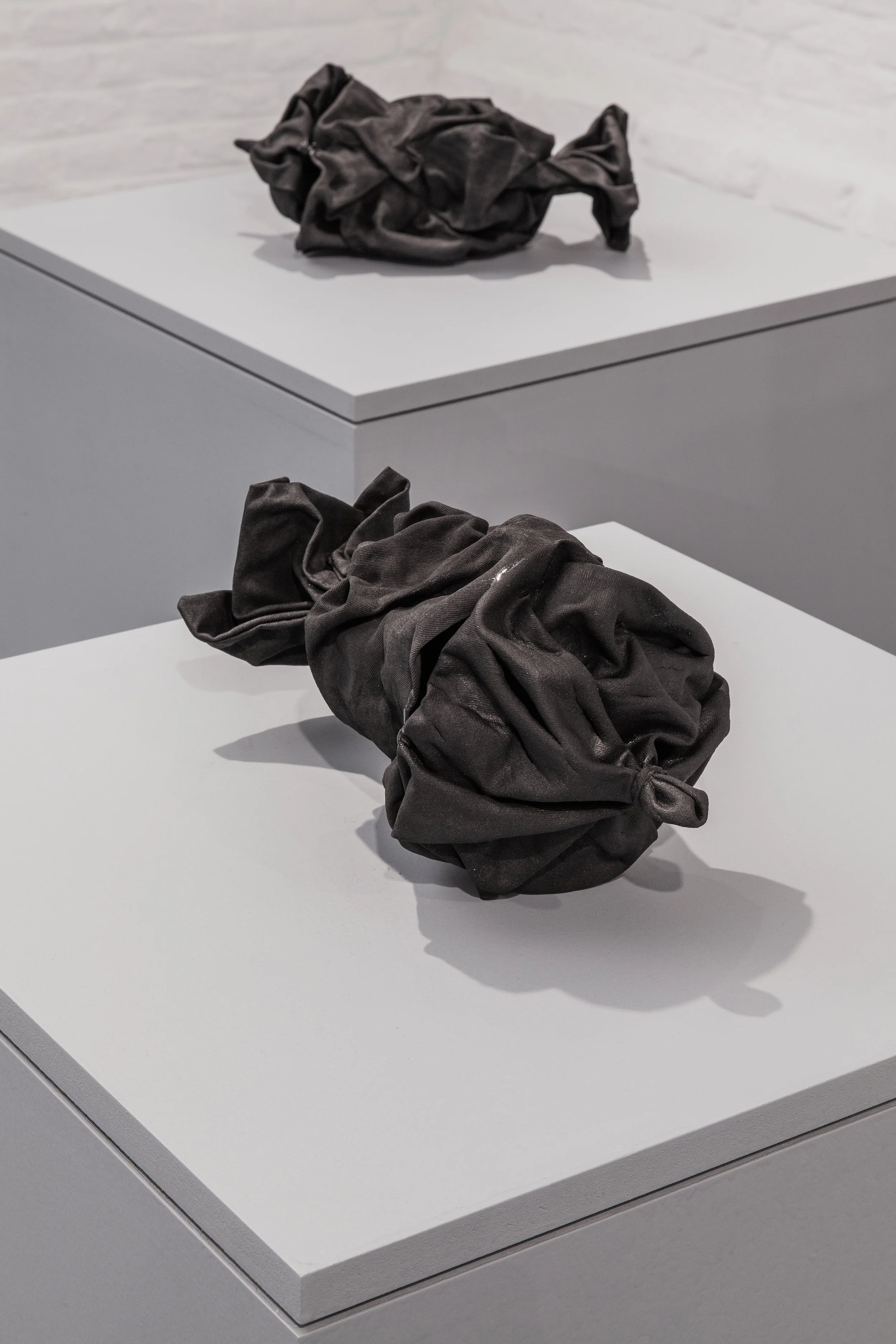
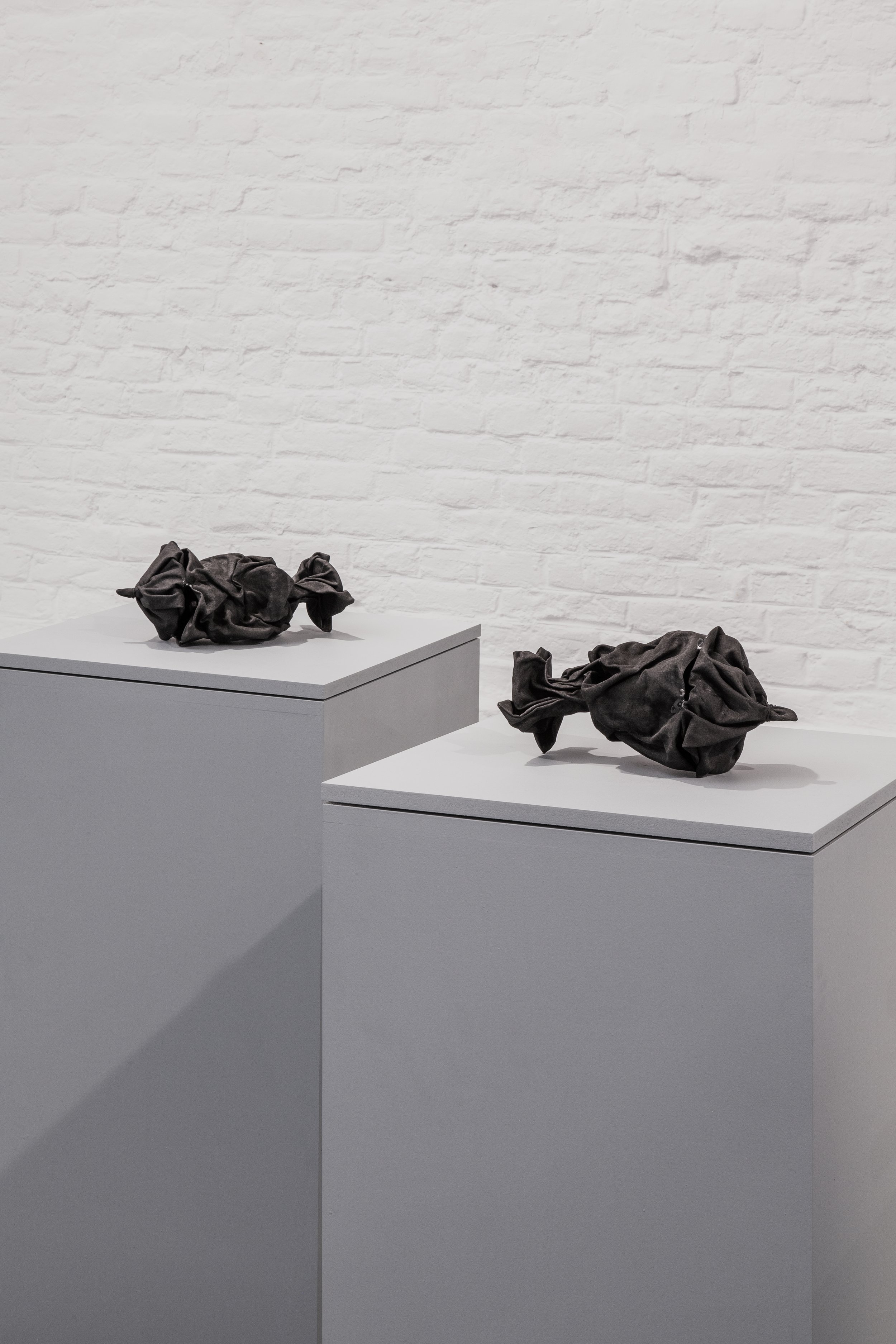
Designers Jenna Kaes and Gregory Lacoua used the process in very different ways. Jenna explored the potential of transforming cotton textiles into funeral urns, while Gregory used the process to transform textile and paper waste into construction bricks.
13
14
15
1 _ Emile De Visscher and Ophélie Maurus, Speculative Archeology, Petrification, for Able Journal, 2023. Accessible here. Credits: Ophélie Maurus.
2 _ Naturally occurring petrification can be witnessed in Arizonian deserts and gave birth to a vibrant and surprising local craft, in the forms of vessels, sinks, and bathtubs. Stefan Pauli, Petrified tree in Petrified Forest National Park, 2001, photograph. https://commons.wikimedia.org/w/index.php?title=File:PetrifiedtreeinPetrifiedForest.jpg&oldid=459806609. Creative Commons License (CC-BY-SA 3.0).
3 _ Edward Goodrich Acheson in the lab with his omnipresent cigar, testing Aquadag, a colloidal suspension of his artificial graphite: https://www.sciencehistory.org/historical-profile/edward-goodrich-acheson. All rights reserved, Acheson Industries.
4 _ Emile De Visscher and Ophélie Maurus, Samples, Petrification, for Able Journal, 2023. Accessible here. Credits: Ophélie Maurus.
5 _ Emile De Visscher, atmosphere firing oven, 2018. Credits: Palta Studio.
6 _ Students from ChimieParisTech, petrified dragon origami, part of the PIG research program between ENSAD and ChimieParisTech, 2016. Image credits: Palta Studio.
7 _ Emile De Visscher, detail of petrified vessel in cardboard, 2020. Image credits: Ophélie Maurus.
8 _ Emile De Visscher, petrified wood, 2020. Image credits: Ophélie Maurus.
9 _ The portrait of Medusa as her head is just cut off, by Italian painter Caravaggio, is renowned for the realism and dramatic facial expression of horror. Caravaggio, Medusa, 1595–1598, oil on linen canvas, mounted on a poplar shield, 60 × 55 cm. Galeria degli Uffizi. https://www.ibiblio.org/wm/paint/auth/caravaggio/medusa.jpg. Photo © WebMuseum Creative Commons License (CC-BY-SA 3.0).
10 _ Reynold Brown, The Monolith Monsters, 1957, film poster. https://commons.wikimedia.org/w/index.php?title=File:TheMonolithMonsters.jpg&oldid=530274906. Public domain.
11 _ The Chronicles of Narnia: The Lion, the Witch and the Wardrobe, 2005, dir. Andrew Adamson, screenshot, VOD, 00:02:20. Walt Disney Pictures/Walden Media. All rights reserved.
12 _ The rock formation of Hvítserkur is tied to a Nordic legend, where a troll would have crossed the sea to destroy a Christian church and been caught by the daylight and petrified into rock. Alexandre Buisse, The freestanding seastack of Hvitserkur, Iceland, 2011, photograph. https://commons.wikimedia.org/w/index.php?title=File:Hvitserkurseastack,Iceland.jpg&oldid=499363410 Creative Commons License (CC-BY-SA 3.0).
13 _ Gregory Lacoua, Petrified bricks made out of paper pulp and textiles, using the petrirication process, with Emile De Visscher, part of the Exhibition “Au Charbon!” at Grand-Hornu, 2023. Image credits: Emile Barret.
14 _ Jenna Kaes, Petrified urns out of cotton, using the petrification process, with Emile De Visscher, part of the Exhibition “Au Charbon!” at Grand-Hornu, 2023. Image credits: Emile Barret.
15 _ Jenna Kaes, Petrified urns out of cotton, using the petrification process, detail, with Emile De Visscher, part of the Exhibition “Au Charbon!” at Grand-Hornu, 2023. Image credits: Emile Barret.


